Canister vs. Hang-On-Back Filters: Which Aquarium Filter Should You Actually Buy?
Disclosure: PawCritic is reader-supported. Some links below are Amazon affiliate links, which means we may earn a small commission if you buy through them — at no extra cost to you.
Here's a scene I've watched play out at least fifty times: someone buys a 55-gallon tank on sale, grabs the HOB filter that came with it, and six months later they're elbow-deep in green water wondering where it all went wrong. The filter wasn't broken. It was just the wrong tool for the job.
Canister and hang-on-back (HOB) filters do the same headline job — move water, house bacteria, trap crud — but they live completely different lives. One hides under your stand, quiet and powerful, asking for a deep clean twice a year. The other hangs off the back of your tank, dead simple to maintain, but with a fraction of the media space. Most owners never think through the trade-offs before buying, and it shows.
I've kept both styles across a dozen tanks over the years, from a 10-gallon nano to a 75-gallon community, and I've got strong opinions. Let's settle it properly: how each works, where each shines, what each costs you in time and money, and — the part people skip — what actually fails on both.
How Each Filter Actually Works
A HOB filter hangs on the tank rim, pulls water up a siphon tube into a box, pushes it through a cartridge or two, and spills it back via a waterfall. The motor sits above water level, which is both its strength and its weakness — easy to reach, but it has to fight gravity to lift water several inches.
A canister filter sits below the tank, sealed and pressurized. Water flows down into the canister under gravity, gets pushed through stacked trays of media — foam, ceramic rings, bio-balls, whatever you choose — then pumps back up into the tank. Because it's a sealed system, the pump works with a full column of water pushing down, which is why a decent canister moves dramatically more water per watt than a HOB of similar rated capacity.
That sealed design is also why canisters can hold 5 to 10 times more media than a HOB. My 75-gallon canister holds about 8 liters of assorted media. The HOB on my 20-gallon holds maybe half a liter if I stuff it. You don't need me to tell you which one hosts more beneficial bacteria — the math is right there.
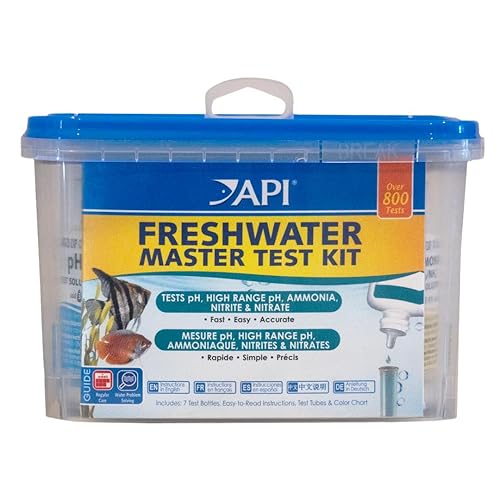
For a deep dive on how the nitrogen cycle actually works and why media volume matters, we've got a full step-by-step nitrogen cycle guide that walks through it from day one.
Filtration Capacity: The Numbers Nobody Quotes
Filter ratings are a marketing swamp. Every box claims a "gallon rating" that assumes an empty tank, no fish, and a pump running at absolute peak. Real-world flow drops 30–50% once media clogs up a bit.
Here's a more honest way to think about it. A HOB rated for 40 gallons moves maybe 150–200 gallons per hour with clean media. A canister rated for 75 gallons moves 300–400 GPH. But here's the thing nobody tells you: for most stocked tanks, that difference only starts to matter when you're dealing with heavy bioloads — big fish, lots of them, or messy eaters like goldfish and cichlids.
For a lightly stocked 20-gallon with a few tetras, a good HOB is honestly fine. For a 75-gallon with a school of clown loaches, the HOB equivalent would need to run at full bore just to keep up, and you'd be cleaning cartridges every week. That's the real dividing line: bioload, not tank size.
Let me put the head-to-head in a table so it's painless:
| Factor | Hang-On-Back | Canister |
|---|---|---|
| Media volume | Small (0.3–1 L typical) | Large (2–10+ L typical) |
| Flow rate | 150–300 GPH typical | 300–700+ GPH typical |
| Bacteria capacity | Low-moderate | High |
| Maintenance | Every 2–4 weeks | Every 3–6 months |
| Maintenance difficulty | Easy, no tools | Moderate, needs disassembly |
| Noise | Waterfall hum + motor | Near-silent |
| CO2 loss / surface agitation | High (good for goldfish) | Low (good for planted tanks) |
| Upfront cost | $25–$80 | $80–$250+ |
| Replaceable media cost | Recurring cartridges | Reusable foam/rings |
| Prime failure mode | Cartridge bypass, flow loss | Air lock, hose leaks |
The pattern jumps out: HOBs are cheap and easy but small. Canisters are expensive and fiddly but massively more capable. Neither is wrong — they're for different jobs.
What a HOB Does Well (and Where It Falls Apart)
HOBs win on three things: price, simplicity, and surface agitation.
Price first. A solid HOB costs $30–$60. A comparable-capacity canister runs $120–$200. If you're on a budget and your tank is under 30 gallons with a reasonable stocking level, spending three times as much on a canister is money that could've bought you a better light or a proper test kit.
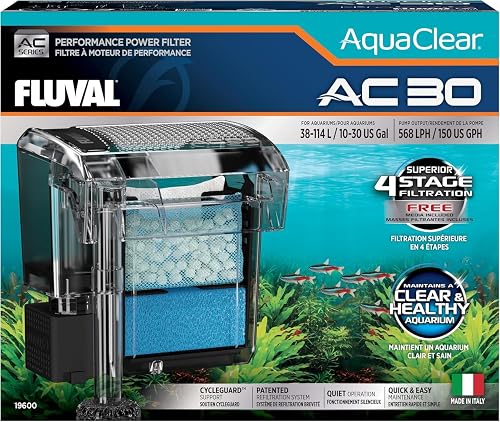
Simplicity is the bigger deal for beginners. You hang it, fill it, plug it in. When the cartridge looks gross, you swap it. No priming, no hoses, no valves. That matters a lot for someone who's never kept fish before — the beginner tank guide we published covers exactly this kind of setup thinking. If you want a proven workhorse in this category, the Fluval AquaClear 50 has been the go-to HOB for decades, and for good reason — the media basket design lets you load it with whatever media you want instead of proprietary cartridges.
Surface agitation matters if you keep goldfish or other high-oxygen-demand fish. HOBs constantly break the surface with their waterfall, which drives gas exchange. Canisters return water below the surface, so you often need a separate air stone or wave maker to get the same oxygenation. For goldfish — messy, oxygen-hungry, and not particularly picky about CO2 — a HOB is genuinely the better choice.
But here's where HOBs fail, and it's not the filter's fault: the cartridges. Most HOBs use disposable cartridges that manufacturers want you to replace monthly. Two problems. First, the cost adds up — $5–$10 a month, every month, forever. Second — and this is the one that gets people — when you toss that cartridge, you throw away a huge chunk of your tank's beneficial bacteria. Swap the cartridge and rinse the rest, and you've effectively crashed part of your cycle. I've seen ammonia spikes from exactly this more times than I can count.
The fix is easy: cut a hole in the cartridge, stuff it with ceramic rings or coarse sponge, and never replace the whole thing again. Rinse it in dechlorinated water during water changes instead. The rings hold bacteria; the cartridge just keeps the shape. If you want to know exactly what media to put in there, our biofiltration media guide breaks down foam, rings, and bio-balls and when each actually earns its place.
What a Canister Does Well (and the Headaches It Brings)
Canisters earn their keep in three situations: big tanks, planted tanks, and heavy bioloads.
Big tanks are the obvious one. A 75-gallon tank with a proper canister gets crystal-clear water with near-silent operation. Try that with a HOB and you'll hear the waterfall from the next room, and you'll be rinsing cartridges constantly.
Planted tanks are where canisters really shine, and it's a subtle thing. Because the outflow sits below the surface, you get gentle, diffuse circulation instead of surface turbulence. That means less CO2 off-gassing, which your plants love. It also means you can run CO2 injection without watching half of it bubble out the top of the tank. If you're serious about aquascaping, this alone settles the argument.
Heavy bioloads are the third case. Messy fish — goldfish, plecos, cichlids, big loaches — produce waste faster than a small filter can process it. The extra media volume in a canister gives you a massive bacteria reserve that handles the spikes.
Now the headaches, because there are real ones.
Priming. A canister needs to be filled with water and purged of air before it'll run. Some have push-button primers that work fine. Others make you fight with a siphon tube or pour water into the top. Do it wrong and you get an air lock — the pump runs, the water doesn't move, and your filter is doing nothing except making a sad buzzing sound. The workaround: never let the intake hose run dry, and if you do get an air lock, tilt the canister side to side while it runs to burp the air out.
Maintenance is a production. Cleaning a canister means unplugging hoses, hauling the thing out from under the stand, disassembling trays, rinsing media in tank water, and reassembling — with a bucket underneath, because there will be drips. It's a 30–45 minute job, which is why owners put it off, which is how a "clean every 6 months" filter becomes a "clean every 14 months" filter. Set a calendar reminder. Future you will be grateful.
Leaks. The seal ring and hose connections are the weak points. If you don't seat the lid right or a hose barb cracks, you get a slow drip — under the stand, onto the floor, often unnoticed for days. Check your hoses for stiffness or cracks every few months, and keep a spare seal ring on hand. It's a $10 part that saves a $200 cleanup.
If you do go the canister route, our guide to canister filters for larger tanks covers the top models and what to look for in flow rate and media capacity.
Which One Should You Buy?
I'm going to give you a decision tree instead of a wishy-washy "it depends."
Get a HOB if: your tank is under 30 gallons; your fish are small and few; you're new to the hobby; or you keep goldfish. Any decent HOB will serve you fine. Don't overthink it. Just don't buy the replacement cartridges — get the reusable-media hack above and you'll have a better filter than 90% of owners.
Get a canister if: your tank is 40 gallons or bigger; you're keeping heavy bioload fish; you have a planted or CO2-injected setup; or you're sick of weekly cartridge swaps. The upfront cost stings, but the maintenance schedule is dramatically lighter.
Run both. This is the pro move and I'll die on this hill. A lot of experienced owners run a canister for the main filtration and a small HOB or sponge filter as backup and surface agitation. It's redundancy, yes — but in fishkeeping, redundancy is what keeps a minor equipment failure from becoming a mass extinction event. When my canister's hose split at 2 AM once, the little sponge filter in the corner kept the tank alive until morning. The Seachem Tidal 75 is my usual pick for this backup role on tanks 40 gallons and up — it has a surface skimmer built in and the media basket is big enough to actually do something.
Money Talk: Upfront vs. Long-Term Cost
Let's do the math on a 40-gallon tank, five-year ownership.
HOB route: $45 filter + replacement cartridges at roughly $8/month for 60 months = $45 + $480 = $525 over five years, assuming you replace cartridges monthly like the box tells you to. If you switch to reusable media, it drops to about $60 total.
Canister route: $150 filter + maybe $30 in replacement media over five years (foam and rings last years) = $180 over five years.
Wait, what? The "expensive" filter is cheaper long-term? Yes. The canister costs less over five years than a HOB with its monthly cartridge tax — and that's before we factor in the canister doing a better job. The recurring-cartridge model is how filter companies make money, and it's the single most expensive ongoing cost in a basic freshwater setup. If you're on a tight budget, the most budget-friendly thing you can do is buy a HOB and never buy cartridges again — stuff the housing with reusable sponge and rings instead.
If you're looking for a starting point, a well-reviewed canister filter in the 60–90 gallon class covers most medium and large freshwater tanks with room to spare — that's the sweet spot I'd point most owners to.
The Setup Mistakes I See Over and Over
Whichever you choose, you can still screw it up. Here are the classics:
Rinsing media in tap water. Chlorine and chloramine kill your bacteria on contact. Always rinse filter media in a bucket of tank water you've siphoned out. This is the #1 mistake in the hobby, and it's why so many people get ammonia spikes after cleaning. As the American Veterinary Medical Association puts it, water quality problems — not infections — are the leading cause of illness in pet fish, and most of those problems trace back to exactly this kind of maintenance slip-up.
Replacing everything at once. If you must replace media, never replace all of it in one go. The bacteria live in the media. Replace one tray or one cartridge at a time, weeks apart, and you keep the colony intact.
Not cleaning the intake. The pre-filter sponge or strainer on the intake tube clogs silently while the filter looks fine on the outside. If your flow has dropped, check the intake first — it's the most common cause of "my filter stopped working" that isn't the filter at all.
Oversizing blindly. A filter rated for 100 gallons on a 20-gallon tank will blast your fish around like a washing machine. Canisters often have adjustable flow — use it. And aim the outflow at a wall or a rock to diffuse the current.
My Bottom Line
If someone put a gun to my head and made me pick one filter system to recommend to the average freshwater owner, it's a canister on anything 40 gallons and up, and a HOB with reusable media on everything smaller. That's not a fashionable answer — it's the answer that costs the least over time and breaks the least often.
The good news is you can't permanently ruin your tank with either choice. Both work. Both keep fish alive and water clear. The question is which one you'll actually maintain — because the best filter in the world is worthless if it's full of gunk in the back of a cabinet somewhere. Pick the one whose maintenance schedule you'll actually follow, set the calendar reminder, and you'll be fine.