Aquarium Myths Debunked: 15 Fish-Keeping Beliefs That Are Just Wrong
Disclosure: PawCritic is reader-supported. Some links below are Amazon affiliate links, which means we may earn a small commission if you buy through them — at no extra cost to you.
Somewhere right now, someone is keeping a goldfish in a bowl because "they only grow to the size of their tank." Someone else is doing a 100% water change on a cycled aquarium because "clean water can't hurt." Both of those people are about to lose fish, and neither will learn the right lesson from it — they'll just blame the fish.
I believed half of these myths myself when I started. I stocked by the inch-per-gallon rule. I fed twice a day because the food bag said so. I did a monthly "big clean" that probably set my cycle back every single time. It took dead fish and a lot of reading to unlearn all of it.
So here are the fifteen myths I hear most, and what's actually true. Some of these will save you money. A few will save fish.
Myth #1: Goldfish Have a Three-Second Memory
The most repeated myth in the hobby, and it's flatly false. Researchers at Plymouth University trained goldfish to push a lever for food and found they still remembered the trick months later. Other work has shown goldfish can recognize individual people and learn their way through mazes.
Think about what a three-second memory would actually mean: your fish could never learn where food comes from, never recognize you, never learn routines. Anyone who has watched a fish race to the corner of the tank when they walk in the room knows that's nonsense. The myth survives because it makes fish feel disposable — and that makes it easier to keep them badly.
Myth #2: One Inch of Fish Per Gallon
The inch-per-gallon rule is the most dangerous math in this hobby. It treats a 3-inch neon tetra and a 3-inch goldfish as the same animal. They are not. A goldfish produces something like twenty times the waste of a tetra, needs cool water, and grows to a foot long with a bioload to match.
Stocking depends on adult size, waste production, temperature, and filtration — not a ruler. The University of Florida IFAS Extension, which publishes some of the most practical ornamental fish health guidance around, emphasizes stocking decisions based on fish size and filtration capacity rather than tank length alone. A 20-gallon with six neons and a small shoal of corydoras is fine. A 20-gallon with two goldfish is a slowly poisoning tank.
Myth #3: Fish Grow to the Size of Their Tank
No. Fish don't stop growing to fit the tank — they keep growing until their organs fail, their spines deform, or chronic poor water quality stunts them. A "small" goldfish in a bowl isn't a happy miniature; it's a goldfish drowning in its own ammonia and dying of organ failure in slow motion.
This myth is how you end up with a pleco in a 10-gallon that's lived three years and looks like a tiny version of its species. That's not adaptation. It's stunting, and it's painful. Every fish needs the enclosure its adult size demands, full stop.
Myth #4: Big Water Changes Stress Fish — Do Tiny Ones Instead
There's a kernel of truth here that people have inflated into a superstition. Rapid, massive swings in temperature or chemistry do stress fish. But a routine 30–50% weekly change, with dechlorinated, temperature-matched water, is the healthiest thing you can do for a tank — and the single biggest difference between thriving aquariums and algae-covered, disease-prone ones.
The people who skip water changes because "they stress the fish" end up doing emergency 90% changes when ammonia spikes, which genuinely does shock the livestock. Consistent partial changes prevent that whole spiral. Change 25–50% weekly. Match the temperature. Dechlorinate. Done.
Myth #5: You Need "Starter Fish" to Cycle a New Tank
Old-school advice said to drop in a few hardy fish and let their waste grow the filter bacteria. What actually happens: you torture a handful of fish for the 4–8 weeks the cycle takes, and some of them die doing it. The cycle doesn't need fish. It needs ammonia.
Fishless cycling exists and it's easy. Dose pure ammonia or seed the filter with a bottled nitrifying bacteria product like Tetra SafeStart Plus, provide an ammonia source, and let the colony establish before any fish go in. Our complete nitrogen cycle guide walks through it step by step. No fish should ever be sacrificed to "start" a tank.
Myth #6: Bettas Live in Puddles, So a Bowl Is Fine
Betta fish come from rice paddies and slow-moving streams in Thailand — shallow water, sure, but warm, spacious, and thick with plants. The "puddle" story is a marketing invention that has killed more bettas than any disease ever will.
Bettas are tropical fish. They need a heater (78–80°F), a filter, and at least 5 gallons. A bowl is an unheated, unfiltered ammonia trap, and the labyrinth organ doesn't excuse it — that organ helps them survive low oxygen, not bad water. Kept right, a betta lives 4–6 years instead of six months.
Myth #7: If the Water Looks Clear, It's Clean
Clear water and clean water are completely different things. Ammonia, nitrite, and nitrate are all invisible. You can have a crystal-clear tank sitting at 2 ppm ammonia — which is lethal — and never know it without testing.
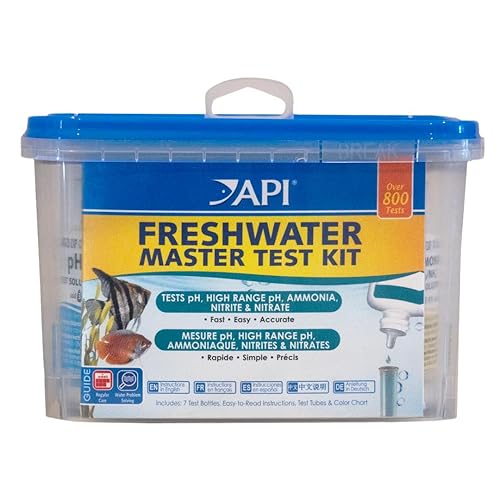
This is why every serious keeper owns a liquid reagent test kit. The API Freshwater Master Test Kit covers ammonia, nitrite, nitrate, and pH for roughly 800 tests, and it's the standard for good reason. Keep a pack of quick-dip test strips around for fast daily glances, but make decisions with the liquid kit. Test weekly, before and after changes. If the numbers are right, the water is clean — no matter how it looks.
Myth #8: Scrub Everything and Change 100% Monthly
The "big clean" is how people crash cycles. Scrub the gravel, wash the decor with soap, rinse the filter in tap water, replace all the water — congratulations, you just rebuilt your tank from scratch and killed your bacteria colony. The fish will follow within a week.
An aquarium is a self-sustaining ecosystem, not a bathtub. The goal is regular maintenance, not occasional deep cleans: 25–50% weekly water changes, wipe the glass, vacuum the gravel you can reach, and leave the rest alone. Rinse filter media in old tank water — never tap water, never replace it wholesale. More on that in myth #13.
Myth #9: Feed Every Day — As Much as They'll Eat in Five Minutes
"As much as they'll eat in 5 minutes" is a recipe for overfeeding, because most fish will happily keep eating for five minutes until they're bloated. Overfeeding is the single most common cause of aquarium problems: it spikes ammonia, fouls the water, and drives the constipation behind most swim bladder issues.
The practical rule: feed an amount the fish finish in about two minutes, once or twice a day, and skip one day a week. Most adult fish in home tanks are overfed, not underfed. If you're unsure, you're overfeeding.
Myth #10: Goldfish Are Coldwater Fish — No Heater Needed
Goldfish are temperate fish, not coldwater fish, and the distinction matters. Coldwater species like white cloud mountain minnows tolerate real temperature swings; goldfish want a steady 65–72°F and suffer when the room swings ten degrees over a day.
In an unheated house, a goldfish tank rides every room-temperature swing, which suppresses immunity and invites disease. A low-wattage heater set around 68–70°F keeps things stable — and stability is the whole game. If your room holds 68–72°F year-round, fine. Most rooms don't.
Myth #11: Algae Means the Tank Is Dirty
Algae isn't a disease or a sign of neglect. It's a nutrient signal. If you have algae, you have excess light, excess nutrients, or both — and scrubbing the glass weekly treats the symptom while the cause keeps manufacturing more.
Fix the cause: cut lighting to about 8 hours a day, feed less, and do the water changes you've been skipping. Algae is a symptom of the same overfeeding-and-deferred-maintenance pattern behind most other tank problems. And honestly, a little algae in a mature tank is healthy — it consumes the same nitrogenous waste you're trying to export.
Myth #12: Aquarium Salt Belongs in Every Freshwater Tank
Salt is a medication, not a tonic. It can help treat specific conditions — mild fin rot, certain parasites, osmoregulatory stress — but dosing every tank, always, is like giving every person antibiotics daily.
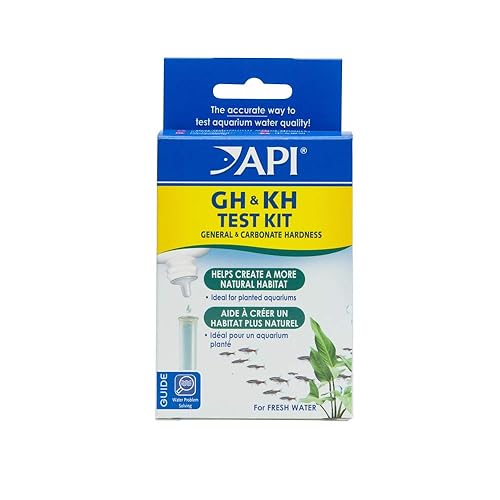
Salt raises conductivity and hardness. Soft-water species (many tetras, most catfish, discus, and all shrimp) tolerate it poorly, and invertebrates are outright harmed by it. If you're using salt for a treatment, track hardness with a GH/KH test kit and remove the salt with water changes when treatment ends. If you're adding it "just in case," stop — you're medicating a problem you don't have with a product your fish may not tolerate.
Myth #13: Rinse Filter Media in Tap Water
Tap water contains chlorine and chloramine, which exist specifically to kill bacteria. Your filter media is coated in the nitrifying bacteria keeping your fish alive. Rinse it under the faucet and you've just executed your cycle.
Rinse filter media in a bucket of water dipped from the tank, squeeze gently, and put it back. It should never come out spotless — a healthy filter is a slightly dirty filter. And never replace all your media at once. If you must swap it, do it gradually over a few weeks so the colony can recolonize the new material.
Myth #14: You Need an Air Stone or the Fish Will Suffocate
Air stones are useful, not mandatory. What fish actually need is gas exchange — oxygen in, CO2 out — and that happens at the water's surface. Any filter that agitates the surface provides all the gas exchange most tanks need.
Running a hang-on-back or canister filter means your water is already oxygenated; an air stone is mostly decoration and noise at that point. Add one if you like the look or want extra circulation in a hospital tank. What matters is surface movement, not bubbles. Our canister vs HOB filter comparison breaks down which type gives you the flow and gas exchange your setup needs.
Myth #15: Disease Outbreaks Are Random Bad Luck
When fish get sick, owners blame the fish — "it must have brought in a parasite." But the University of Florida IFAS Extension's work on ornamental fish health shows most outbreaks trace back to environmental stress. The pathogens are often already in the tank, dormant, waiting for the fish's immune system to drop below the line. Bad water, temperature swings, and overcrowding are what tip them over.
That's why two tanks can buy fish from the same store on the same day, and one breaks out with ich while the other stays clean. It's not luck. It's husbandry. Keep the water right and most diseases never get their opening — our guide to aquarium fish diseases covers the prevention side in detail.
Myth #16: Remove the Fish During Water Changes
Another one that sounds careful and is actually the opposite. Scooping your fish into a bucket, doing the water change, then dumping them back is a triple stressor: handling, a sudden change in water chemistry (the bucket water is always a different temperature and pH than the tank), and the shock of being returned. Fish don't need to be evacuated for a 25–50% water change. They just don't.
What they need is for you to be careful with the other variables: dechlorinate the new water, match the temperature, and don't pour it in like you're baptizing them. Vacuum the gravel, siphon out the old water, add the new, done. The fish will ride it out right where they are — and the tank's bacteria, which live on surfaces and in the filter, stay fully intact instead of getting disrupted by your fish-handling circus.
The one exception: if you're changing the water because of a medication you need to remove, or you're working in a tank so badly out of whack that you're doing a near-total emergency change, then yes — move sensitive fish to a holding container with tank water first. That's an emergency protocol, not a weekly habit.
Myth #17: Lights On 24/7 Keeps Your Plants Happy
This one comes from the plant crowd, and it's wrong in a way that hurts everyone. Aquatic plants need a dark period every day. Photosynthesis stops without light, and plants switch to respiration — consuming oxygen, just like your fish. A tank lit around the clock gets plants that grow marginally more during the light hours and a tank that runs chronically short on oxygen at night, plus a guaranteed algae explosion, because algae doesn't need a dark period and will happily outgrow your plants with 24-hour light.
Eight to ten hours of light a day is the standard for a planted tank. More than that, you're not growing plants — you're farming algae. The same advice applies to the fish side of the house: a regular photoperiod gives your fish a day/night rhythm they're wired for. If your schedule means the room lights are on late, put your tank lights on a timer and let the tank go dark on schedule. It's the single cheapest piece of gear in the hobby and the one most people skip.
The Bottom Line
Almost every myth on this list exists to make fish keeping easier to sell and harder to do well. The truth underneath is simpler than the folklore: stable water, appropriate space, and restraint — in feeding, in cleaning, in stocking. Get those three right and you barely need the mythology at all.
And when in doubt, test the water before you change anything else. That kit pays for itself the first time it stops you from medicating a water quality problem.
Related reading: How to Cycle an Aquarium: The Complete Nitrogen Cycle Guide, Aquarium Gravel vs Sand: Which Substrate Is Actually Better?, Canister vs HOB Aquarium Filter Comparison and Common Aquarium Fish Diseases: Symptoms, Treatment, and Prevention.