15 Bird Myths Debunked: What New Owners Get Wrong
Disclosure: PawCritic is reader-supported. A few links below are Amazon affiliate links, and we may earn a small commission if you buy through them — it costs you nothing extra.
Every bird owner has that moment — the one where you realize you've been following advice that's completely backwards. Mine came three years into keeping birds, when an avian vet casually mentioned that the "cage mirror keeps a lonely bird company" thing I'd been told as a kid was actually a recipe for a neurotic, bond-confused parrot. I felt like I'd been lied to by the entire pet industry. In a way, I had been.
Bird care is swimming in myths. Some are harmless leftovers from 1970s care sheets. Others are actively dangerous — the kind of advice that gets birds killed. I asked avian vets, read the literature, and made every mistake myself so you don't have to. Here are the fifteen myths I hear most often, and what's actually true.
1. "Birds are low-maintenance pets. You just feed them and clean the cage."
Where does this one even come from? Parrots are among the most demanding pets in existence. They're as intelligent as a human toddler — the Association of Avian Veterinarians has pointed out that companion parrots need daily enrichment, social interaction, and mental stimulation, and that neglect shows up as feather plucking, screaming, and self-mutilation. They need hours of out-of-cage time, daily training, fresh food prep, and a household that accommodates their noise. A dog sleeps most of the day. A parrot is awake, aware, and needs a job. If you wanted low-maintenance, get a plant.
2. "An all-seed diet is natural, so it's fine."
This is the most dangerous myth on the list, and the pet store is partly to blame — the seed mix aisle is huge and the pellet aisle is small. Wild parrots eat a diet dominated by fruits, nuts, flowers, and a narrow range of seeds — not a bowl of sunflower seeds. Commercial seed mixes are high in fat, low in calcium and vitamin A, and nutritionally incomplete. The Association of Avian Veterinarians recommends a formulated pelleted diet as the base for companion parrots, with fresh vegetables daily and seed used as treats. An all-seed diet sets up obesity, fatty liver disease, and vitamin A deficiency — three of the most common problems avian vets treat.
The frustrating part is that birds love seed, which makes the myth self-perpetuating. A bird offered a bowl of seed will eat the seed and ignore everything else, because seed is calorie-dense and delicious — and then it develops a deficiency and you're at the vet wondering why. Converting a seed-addicted bird to pellets takes weeks of patient mixing, and it's the single best diet change you can make for a bird's long-term health. Our guide to bird pellet diets covers how to convert a seed-addicted bird to pellets without starving it.
3. "Seed-only diet gives a bird everything it needs."
Same myth, different costume. If you feed nothing but seed, your bird will eventually be deficient in calcium, vitamin A, iodine, and several amino acids. Calcium deficiency is particularly brutal in female birds — it leads to egg-binding, which can kill a hen within hours. A formulated pellet + fresh vegetable diet prevents nearly all of this.
4. "You can tell a bird's sex by its cere (the area above the beak)."
Works for adult budgies, where a brown, crusty cere usually means a hen and a bright blue one means a cock. For most other species — cockatiels, conures, lovebirds, African greys — you cannot reliably sex a bird by appearance, and even budgies throw curveballs (young birds, albinos, and color mutations break the rule). If you need to know, a DNA test from a feather or blood sample costs about $20–30 and is the only reliable way for most species. Guessing wrong matters, because chronic egg-laying and hormonal behavior differ by sex.
5. "A mirror keeps a lonely bird company."
I believed this one for years. The reality: many birds don't recognize their reflection as themselves — they see a "companion" that never responds properly, which triggers frustrated bonding behavior. Mirrors are implicated in obsessive behavior, regurgitation at the mirror, and birds that bond to a piece of glass instead of their humans. Some individual birds handle mirrors fine, but it's a risk with no real upside. A better approach: give the bird your actual company, or a foraging toy to work on. A shreddable foraging toy sized for small-to-medium parrots keeps budgies and cockatiels busy for hours and doubles as beak conditioning — way better than a mirror. Our roundup of bird toys and enrichment has more options for keeping a bird occupied.
6. "Birds need a cuttlebone for calcium."
Cuttlebone is fine as a supplemental source — most birds will nibble it. But it's not a complete answer. Breeding hens and calcium-stressed birds need substantially more calcium than a cuttlebone provides, and pellet-based diets already include balanced calcium. Think of cuttlebone as a snack and a beak conditioner, not a supplement strategy. If you're worried about calcium, talk to an avian vet — don't just throw a cuttlebone at the problem.
7. "Wing clipping is cruel / wing clipping is necessary."
Both extremes are wrong, and this debate gets more heat than it deserves. The reality: wing clipping is a management tool with real trade-offs. Clipped birds are easier to keep safe indoors (no ceiling fans, no open windows, no hot pans) but lose the ability to exercise and escape danger, and a poorly done clip can cause injury and psychological trauma. Unclipped birds get full exercise and confidence but demand a fully bird-proofed home. There's no universal right answer — it depends on your household, your bird's flight skills, and your risk tolerance. What's genuinely wrong is clipping without understanding the trade-offs, or letting a bird become flightless in a home that isn't safe anyway.
8. "Birds are quiet pets."
Only if you keep a canary. Parrots are loud by nature — vocalization is how they communicate with their flock (that's you), and some species scream at dawn and dusk on a schedule you can't negotiate with. A cockatiel's contact call carries through walls. A conure's scream is genuinely piercing. Budgies chatter constantly. If you live in an apartment with thin walls, research the noise profile of the species before you bring one home — our parakeet vs. cockatiel comparison is a good starting point for two of the most common "quiet" birds that absolutely are not.
9. "Teflon and non-stick pans are fine as long as the bird is in another room."
No. Just no. Overheated non-stick cookware releases fumes containing PTFE — the gas is odorless and kills birds within minutes by causing acute respiratory distress and hemorrhaging. It doesn't matter what room the bird is in; the fumes move through the whole house. The Humane Society of the United States explicitly warns that non-stick cookware is one of the most common causes of sudden bird death in homes.
And it's not just pans. PTFE hides in drip trays, air fryers, toaster ovens, waffle irons, space heaters, heat lamps, and self-cleaning ovens — which hit 800°F and off-gas heavily. Even a brand-new non-stick pan heated empty for a few minutes can release fumes. If you keep birds, the safe answer is simple: no non-stick anything, ever. Cast iron, stainless, and ceramic are your friends, and they cook fine. Our household dangers guide has the full list of hidden bird killers.
10. "A sick bird will look sick."
This is the myth that kills. Birds are prey animals — showing weakness gets you eaten, so they hide illness with terrifying effectiveness. By the time a bird looks sick, it's usually critically ill. A bird sitting fluffed at the bottom of the cage, tail bobbing with each breath, is an emergency, not a "let's watch it for a day" situation. Learn the subtle signs — changes in droppings, appetite, vocalization, perching habits, or a bird that suddenly lets you touch it when it never did before. We wrote a full guide on early warning signs of a sick bird; bookmark it before you need it, because you won't be reading calmly when you do.
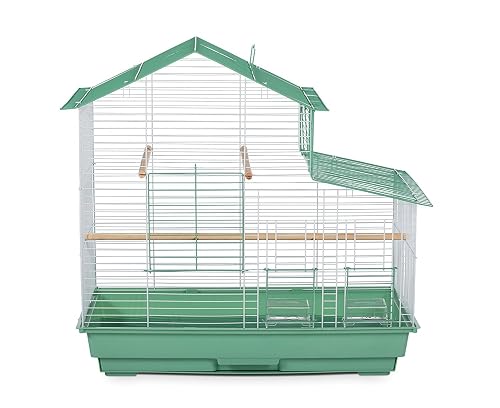
One thing worth owning before you need it: a cage-mounted bird warming panel. Sick birds lose body heat fast — a fluffed, lethargic bird needs supplemental warmth at 85–90°F while you arrange the vet visit, and you don't want to be shopping for one at 11 PM with a crashing bird on your hands.
11. "Birds can live on bread and table scraps."
Bread is nutritionally empty for birds — it fills them up without providing anything they need, and it's linked to obesity and malnutrition. Table scraps are a minefield: avocado is toxic to birds (the ASPCA Animal Poison Control Center lists it as causing cardiac damage), and chocolate, caffeine, alcohol, onion, garlic, and anything salty are all dangerous. Some human food is genuinely fine as an occasional treat — plain cooked egg, most vegetables, some fruit — but "scraps" as a dietary staple is a fast track to a sick bird.
12. "You should get your bird a companion so it doesn't get lonely."
Sometimes true, often a disaster. A second bird can absolutely be great — but two birds bond to each other and frequently lose interest in their human entirely, which defeats the purpose if you wanted an interactive pet. Adding a bird to a bonded pair of cages can cause fighting, and introducing a sick or mismatched bird spreads disease. If you're getting a bird to have a companion animal, get one bird and be its flock. If you want two birds, plan for them to be each other's flock and adjust your expectations about how much they'll want to interact with you. Either way, quarantine any new bird for 30–90 days before introducing it to an existing one.
13. "Wing clipping and cage size don't matter much for small birds."
Smaller bird, smaller cage — sounds logical, and it's wrong. A budgie's minimum is roughly 30" wide; a cockatiel needs 24×24×30 at least, and bigger is always better. Birds in undersized cages develop behavioral problems, feather damage, and obesity from lack of exercise. Bar spacing matters even more — the wrong spacing can trap a bird's head. The cage is the bird's entire world for most of the day; skimping on it is like locking a person in a closet and wondering why they're miserable.
14. "You can't train birds. They're not dogs."
Birds are incredibly trainable — arguably easier than dogs in some ways, because food motivation is straightforward and they learn fast. Target training, step-up commands, recall (flying to you on cue), even trick training — all standard. Training isn't just a party trick; it's the foundation of a tame, confident bird and the cure for a lot of "bad" behavior that's actually boredom. Step-up training is where every owner should start, and our step-up training guide walks through it methodically.
15. "Birds don't need to see a vet unless they're sick."
They absolutely need annual wellness exams — the same as dogs and cats. An avian vet can catch weight loss, organ issues, and nutritional problems months before they're visible, and a yearly exam costs far less than an emergency visit for a bird that's already crashing. Find an avian vet before you have an emergency, because most general practices won't see birds — the average dog-and-cat clinic has no avian equipment and little training in bird medicine.
Annual wellness checkups aren't optional. The exam itself is usually quick — weigh-in, a physical exam, a look at the droppings, sometimes a blood panel — and it establishes a baseline for your bird's normal. When something does go wrong months later, that baseline is what lets the vet tell "slightly off" from "emergency." It's the cheapest health insurance you can buy for a bird, and it's the difference between catching a problem early and losing a bird.
The Bottom Line
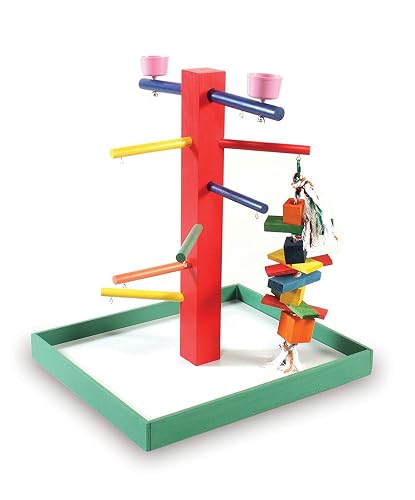
Strip away all fifteen myths and bird keeping comes down to four honest rules: pellets and vegetables over seed, no non-stick cookware ever, an avian vet for annual checkups, and a bird-proofed home with daily interaction. Everything else is detail.
And when you do bring a bird home — get the foraging toys, get a proper cage, and get comfortable with the idea that you now live with a tiny, loud, brilliant roommate who will absolutely judge your cooking. It's worth it. Just don't let the myths run your husbandry.