How to Teach Your Parrot to Step Up: A Step-by-Step Training Guide
Disclosure: PawCritic is reader-supported. A few links below are Amazon affiliate links, and we may earn a small commission if you purchase through them at no additional cost to you.
Most parrots bite for one of three reasons: they're scared, they're hormonal, or they've been grabbed. That third one is the one you can fix on your own — because "step up" training is really just teaching a parrot that your hand is a perch, not a predator.
I've trained step up on everything from a 30-gram budgie to a 500-gram African grey, and the failures I've seen almost always share one thing: the owner moved too fast and grabbed too much. This is a slow game. The bird sets the pace. Your entire job is to make the hand the safest place in the room.
Before you start: if your bird is newly home, sick, molting hard, or clearly terrified, don't train yet. Give it two weeks to settle, then read this and start. Training a stressed bird just teaches it that hands are even scarier.
What You Need Before You Start
Keep it minimal. You need:
- High-value treats. Small pieces of millet spray, a tiny bit of seed, or a piece of a favorite fruit — whatever your bird would cross the cage for. Chop it small; one treat per successful step is plenty.
- A calm room. No other pets, no TV blaring, no kids bouncing. Ten quiet minutes beats forty distracted ones.
- Your hand at chest height or lower. A hand looming down from above reads as a hawk to a bird's brain. Approach from below, always.
- Patience measured in weeks, not sessions. If you're in a hurry, you're going to get bitten.
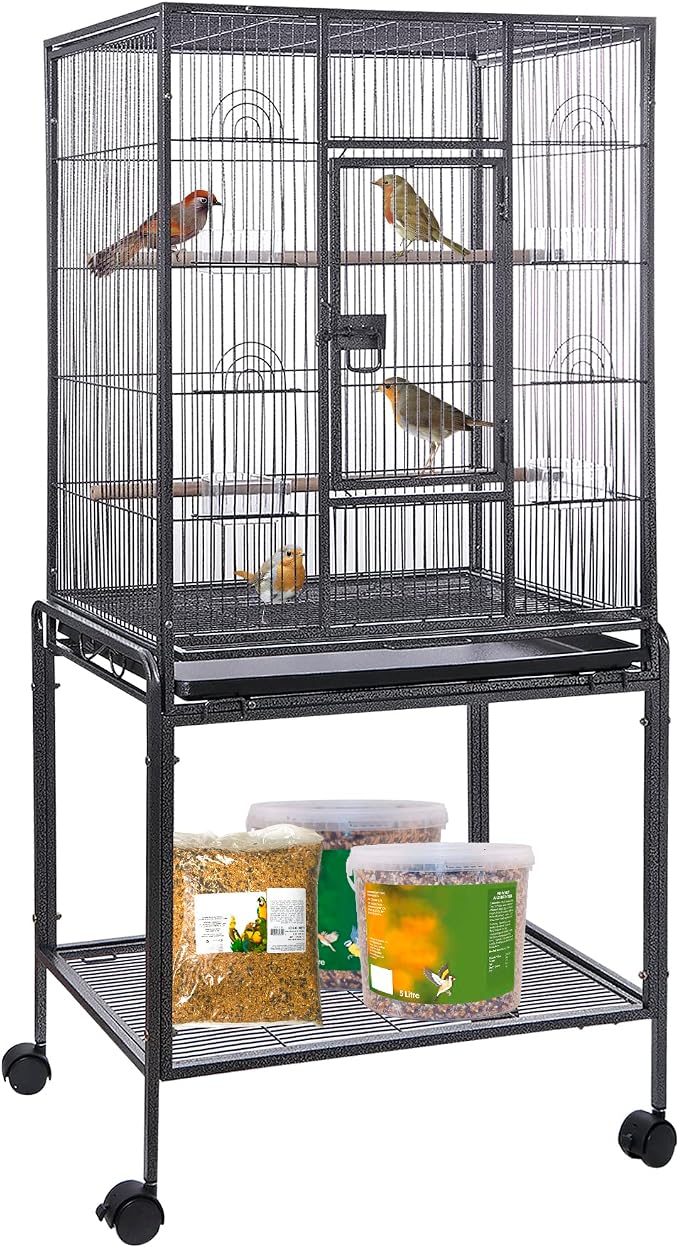
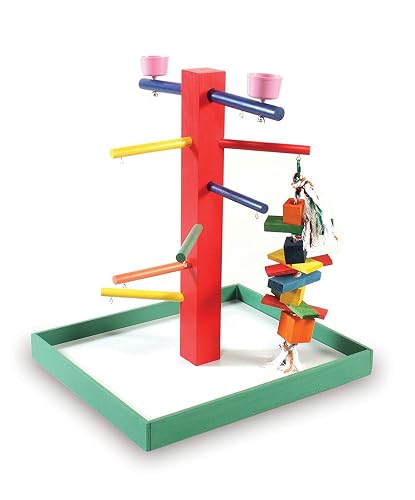
One tool that legitimately helps: a cage with a play-top or a portable T-stand gives you a neutral place to work that isn't the bird's territory — and it keeps your fingers out of the line of fire while the bird learns. You can also use a handheld wooden perch the same way. The principle is identical; the perch just buys you safety margin on a nervous bird.
Step 1: Teach the Bird to Take a Treat From Your Hand
Before the bird ever steps onto anything, it has to learn that your hand near its space means good things. This stage is pure relationship repair.
Hold a treat at the end of your fingers, palm down (like a bird feeder), or offer it through the cage bars for a shy bird. The bird reaches, takes it, you say nothing, you withdraw slowly. Repeat. Several times a day, short sessions.
The moment you're looking for: the bird reaches for the treat with its foot on your fingers instead of just its beak. That's the first physical contact, and it's a huge step. Some birds take days to get here. Some take weeks. Some — the ones who've been grabbed — take months, and that's fine. Speed is not the goal; trust is.
If the bird lunges or bites, you moved too fast or the treat wasn't interesting enough. Back off a step. Try a better treat. Never punish a bite — a bite is information, and the information is "I'm not ready."
Step 2: Introduce the Hand as a Perch
Now you transition from "hand holds food" to "hand is a perch that sometimes holds food." This is where most people blow it by rushing.
Place your hand flat, fingers together, and bring it to the bird at chest height or lower, a few inches away. Hold it there. Don't reach for the bird — present the hand like a branch. The bird will look at it, maybe lean toward it, maybe ignore it. Fine. Hold the position, then withdraw and give a treat regardless of what the bird did. You're rewarding proximity, not performance.
Repeat until the bird's default response to your offered hand is to lean in or step toward it. This is your green light — not before.
Step 3: The Step Up Command Itself
Now the actual behavior. With your hand presented as a perch, give a gentle cue — "step up" in a low, calm voice — and press your hand gently against the bird's lower chest/legs, just above the feet. The pressure tips the bird slightly off balance, and stepping onto your hand is the natural recovery. When it steps up: treat, praise, brief celebration.
Three things make or break this step:
- Always cue before you press. The word has to come first, every single time, so it eventually predicts the movement. My cockatiel Ash learned "up" in about two weeks this way.
- Press against the chest, never the belly and never the tail. The tail is a steering wheel; grab it and you're grabbing the bird.
- Support the bird fully when it steps. A bird that wobbles on an unsteady hand will bail. Steady hand, treat ready, and keep the first several sessions right next to the cage so the bird can hop back if it wants.
The very first step-ups are often grabby, uncertain, and fast. That's normal. Celebrate any attempt, reward any step, end the session on a success — even a tiny one.
Step 4: Shape It Up — Distance, Duration, Distractions
Once the bird steps up reliably inside its comfort zone, you generalize the behavior. This is where "step up" becomes a life skill instead of a party trick.
- Increase distance from the cage by a few feet at a time. The bird should always be able to get back to its cage at first; don't trap it across the room.
- Extend duration. A few seconds on the hand becomes a minute becomes five. The Association of Avian Veterinarians recommends regular, consistent handling as part of basic parrot wellness — and this is exactly how you get there without it turning into a chase.
- Add distractions gradually. Another person in the room, the TV on low, eventually a window with the blinds shut. Each new element is a new skill for the bird.
- Practice step-up from cage top, from a play stand, from the floor. Different surfaces, same cue. The bird should step up wherever it is, whenever you ask.
This is also the stage to add a second cue — "step down" — which is just the reverse, presented near a perch or the cage door. Some birds pick it up instantly; others take forever. Both are fine.
The Four Mistakes That Sabotage Step-Up Training
Mistake 1: Grabbing. If the bird doesn't step, don't scoop, don't grab, don't corner it. Every grab teaches the bird that hands are dangerous and reinforces the exact fear you're trying to erase. If the bird won't step, the session's over — try again later with better treats.
Mistake 2: Inconsistency. Training every day for a week, then nothing for two weeks, teaches the bird nothing. Ten minutes most days beats an hour on Sundays. The cue word has to be the same word, same tone, every time — "up" doesn't mean "step up!" shouted from across the room.
Mistake 3: Rewarding the wrong thing. If you treat when the bird bites you and walks away, you've trained a biter. Only treat the behavior you want. And if the bird is stepping up but biting as it does — a common anxious-bird behavior — don't punish the step to punish the bite; you'll lose both. Separate the behaviors and reward the step.
Mistake 4: Giving up and going back to towel grabs. I've seen owners train for three days, get bitten once, and revert to grabbing the bird in a towel to get it out of the cage. That resets everything. Every towel grab is a step backward — the bird learns that hands are only for capture. If you're stuck, go back to Step 1 and rebuild the hand-is-good association. Our warning signs of a sick bird guide is also worth a read here — a bird that suddenly regresses in training is sometimes a bird that feels unwell.
What to Do When You Get Bitten
You will get bitten. Everyone who trains parrots does, and the bite is never as bad as the anticipation of it. Here's the protocol:
- Don't react. No yelling, no flinching, no dropping the bird. A loud reaction is deeply entertaining to a parrot and gets repeated forever.
- Remove your hand slowly. Pulling fast can tear skin and teaches the bird that biting makes the scary thing go away fast.
- End the session calmly. Not as punishment — just as a natural stop. No drama.
- Think about why. Was the bird over threshold? Molting? Hormonal? Tired? Cornered? Nine times out of ten the bite was your misread, not the bird's malice.
Parrots aren't mean. They're prey animals with a 500-millisecond flight-or-fight reflex and no hands — a beak is all they've got. Biting is communication, and the message is almost always "too much, too fast."
Training a Rescue Bird: The Longer Road
If you adopted a bird with a history — a rehomed cockatoo, a grey that spent years in a garage, a conure that came in with bite scars on its previous owner's hands — the training I've described still works. It just takes longer, and you need to adjust the rules.
First, drop the timeline entirely. A traumatized bird isn't behind schedule; it's on its own schedule, and comparing it to a hand-raised baby is how owners get frustrated and give up. I've worked with a rehomed African grey that took eight months to take the first treat from my hand. Eight months. And then, six weeks after that, it stepped up like it had been doing it forever. The breakthrough was sudden, but the trust-building was months of boring, daily repetition.
Second, respect the bite history. If you know the bird bites hands, don't start with your hand at all. Start with a training perch or a wooden dowel — a neutral object the bird can learn to step onto without any hand trauma association. Once the bird reliably steps onto the dowel, hold the dowel while it steps; then move your hand closer to the dowel each session; eventually offer your hand alongside the dowel and let the bird choose. You're letting the bird approach the hand on its own terms instead of forcing contact.
Third, watch for triggers you can't train away. Some rescue birds are fine with everyone except men, or except people wearing hats, or except anyone who approaches from their left side. Don't fight the trigger with repetition — manage it. If hats are the problem, don't wear hats around the bird. You can sometimes desensitize a bird to a specific trigger slowly, but that's advanced work best done with an avian behavior consultant. Managing it isn't failure; it's good husbandry.
And finally: rescue birds regress. They'll have weeks where they step up perfectly, then a bad molt or a loud noise and suddenly they're biting again. That's not your failure and it's not the bird being "bad." It's stress. When it happens, step back a stage — go back to treats through the bars, rebuild the association, and climb the ladder again. Every regression is shorter than the last one if you handle it calmly.
How Long Does This Actually Take?
Realistic timelines, from the birds I've trained and the owners I've watched:
| Species / situation | Time to reliable step up |
|---|---|
| Young hand-raised budgie, no bad history | 1–2 weeks |
| Adult cockatiel, previously handled | 2–4 weeks |
| Adult conure or small parrot, some trust issues | 1–3 months |
| Rehomed or previously grabbed bird | 3–6 months — and that's okay |
| Large parrot (macaw, grey) with history | Months to a year, sometimes longer |
The timeline is a function of history more than species. A bird that has never been grabbed learns fast. A bird that has been grabbed for years has to unlearn a survival response first. If you adopt a rehomed parrot, budget months, not weeks, and celebrate the small wins — first treat, first touch, first step — as the victories they are.
Beyond Step Up: What Comes Next
Once step up is solid, you have a bird that trusts your hand, which unlocks everything else: recall training, target training, trick training, and — the practical payoff — a bird that can be moved out of a room safely when there's danger, or transported to a vet without a wrestling match. The Association of Avian Veterinarians stresses that birds comfortable with handling tolerate veterinary exams and medication far better, which is a genuine health benefit, not just a convenience.
For the next phase, target training is the natural step — a clicker and target stick kit teaches the bird to move where you point, which is step-up training with a joystick. And if your bird is still working on out-of-cage manners, our household dangers guide for pet birds is essential reading before you give it free run of a room.
The One-Sentence Version
Step up isn't a trick you teach a parrot — it's a promise you keep repeating until the bird believes it: hands are safe, hands mean treats, and stepping up always works out. Move slowly, reward everything, never grab, and the bird will get there on its own schedule.
And when it finally happens — the first time your bird steps onto your hand without hesitation, looks up at you, and just sits there — you'll understand why people put up with the bites to get here.
Related reading: Parakeet vs Cockatiel: Which Bird Fits Your Life?, How to Tell If Your Bird Is Sick: 15 Warning Signs, Household Dangers for Pet Birds: A Safety Guide and Bird Toys & Enrichment Products.