Feather Plucking in Parrots: Causes, Treatment & What Actually Works
Disclosure: PawCritic is reader-supported. A few links below are Amazon affiliate links, and we may earn a small commission if you purchase through them at no extra cost to you.
The first thing I look at when a bird comes in with bald patches isn't the feathers. It's the owner's face — because by the time someone books a vet visit for feather plucking, they've usually been blaming themselves for months. Stop that. We're going to sort this out properly, and that starts with understanding what you're actually dealing with.
Feather destructive behavior — that's the clinical term, and it covers everything from mild over-preening to chewing feathers off to full self-mutilation — is one of the most common reasons birds land in my exam room. It's also one of the most frustrating, because it's almost never one single cause. It's a puzzle with pieces that fit together differently for every bird.
Plucking vs Preening vs Molting — Know What You're Looking At
Before anything else, you need to be sure it's actually plucking. Normal preening is smooth and methodical: the bird runs each feather through its beak, spreading oil from the preen gland, keeping the plumage in order. It looks like grooming, because it is. Molting is seasonal feather replacement — old feathers drop out on their own and new pin feathers come in wrapped in their little keratin sheaths. During molt you'll see pin feathers on the head (birds can't reach there to preen, so it stays tidy) and loose feathers in the cage bottom.
Plucking is different. You'll see broken shafts, chewed feather tips, or actual bald patches — most commonly on the chest, under the wings, and along the legs. Bald skin is never molting. If you're seeing skin, this is feather destructive behavior, and the clock is ticking on getting it addressed before it becomes a habit that's hard to break.
The Rule That Saves Birds: Medical First, Behavioral Second
Here's the mistake that costs birds months of suffering: assuming it's boredom. The Association of Avian Veterinarians (AAV) is emphatic about this — feather destructive behavior warrants a full veterinary workup before any behavioral diagnosis is made. Not after. Before.
Why? Because the medical list is long and real: skin infections, Giardia and other parasites, feather mites and lice, bacterial or fungal folliculitis, pain from arthritis or egg binding, liver and kidney disease, heavy metal toxicity (lead and zinc poisoning from cage bars or toys), and nutritional deficiencies — vitamin A deficiency is a classic culprit in seed-only diets. Even psittacine beak and feather disease (PBFD), a viral illness, can present with feather loss that looks identical to behavioral plucking to the untrained eye.
A bird that plucks because its liver hurts is not going to stop plucking because you bought it a new toy. That's not pessimism — that's triage.
Some Species Pluck More Than Others
Certain birds are overrepresented in my exam room, and it's worth knowing if yours is one of them. African greys are the classic pluckers — they're brilliant, sensitive, and chronically under-stimulated in most homes, and their picking tends to start young and escalate. Cockatoos are close behind, especially the ones that bond intensely to a single person and fall apart when that person leaves the room. Macaws chew. Eclectus parrots are prone to feather issues tied to nutrition and hormones. Even budgies and cockatiels pluck, though less often. Knowing your species' tendencies doesn't change the workup — medical first, always — but it does change what you're watching for and how aggressively you should manage enrichment.
What the Vet Workup Actually Looks Like
So what happens at the vet? A thorough physical exam first — feathers, skin, mouth, body condition. Then blood work: a complete blood count and biochemistry panel to check for infection, inflammation, and organ function. A fecal exam looks for parasites like Giardia. Depending on what we find, the next steps might include skin and feather biopsies (done under local anesthetic, and they're the gold standard for diagnosing folliculitis), radiographs to look for heavy metal particles in the gizzard, or PCR testing for PBFD and other viruses.

A full workup isn't cheap. I won't pretend it is. But it's still cheaper — in money, time, and heartbreak — than treating the wrong thing for a year while the real problem quietly gets worse. I've seen birds on anxiety medication for months that actually had zinc toxicity. The bloodwork caught it in one visit.
When It's Behavioral — The Checklist
If the medical workup comes back clean, now — and only now — we talk behavior. And when we do, I run through the same checklist with every owner:
Sleep. Parrots need 10 to 12 hours of dark, quiet, undisturbed sleep. Every night. Not "mostly." A bird that's chronically sleep-deprived is a bird that picks at itself — it's the avian equivalent of biting your nails until they bleed, and it's shockingly common in households where the TV stays on until midnight in the bird's room.
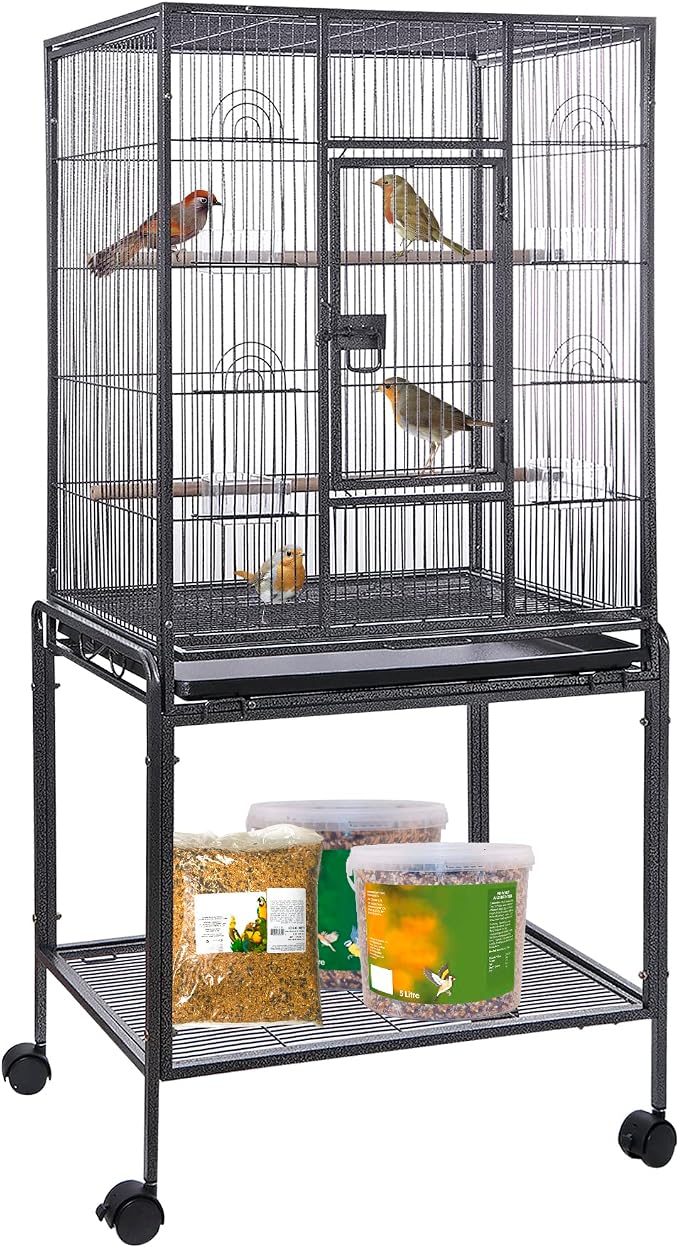
Cage size and layout. The bird's wings should not touch the bars when it stretches them. Perches should be varied — natural wood of different diameters, not one uniform dowel. If the cage is too small or too empty, the bird's day has no structure, and boredom fills the gap.
Enrichment. Foraging is the big one. Wild parrots spend hours a day working for food; a bowl of pellets takes ninety seconds. Hiding food in foraging toys, rotating toys weekly so nothing gets stale, and providing shreddable material — parrots love destroying things, and it's a healthy outlet when it's directed at toys instead of their own feathers.
Out-of-cage time. Every day, supervised, outside the cage. This isn't optional for a parrot. It's how they burn physical and mental energy, and a bird that's cage-bound all week is a bird set up to fail.
Cage placement. Where the cage lives matters more than most people think. A cage crammed into a high-traffic hallway means constant startle reactions — parrots are prey animals, and movement at eye level reads as threat. A cage in a dark, quiet corner, on the other hand, can feel like exile to a social animal. The sweet spot is a corner of a room where the bird can watch the household go about its day without being in the middle of it, with one side against a wall so nothing creeps up behind. And don't put the cage directly in front of a window — the sight of wild birds outside is stimulating to some parrots and terrifying to others.
No punishment. Ever. Spraying a plucking bird with water or shouting at it doesn't teach it anything except that you're unpredictable, which raises stress, which increases plucking. There is no scenario where punishment helps this condition.
The Attention Trap
Here's the psychological loop that keeps plucking alive, and it's a sneaky one. The bird plucks. The owner rushes over, worried, talks to the bird, maybe picks it up. The bird gets attention — and for a social animal starved of interaction, even negative attention is attention. So the bird plucks more, because plucking reliably produces a response.
The hardest conversation I have with owners is this: when you stop reacting to the plucking, it often gets worse before it gets better. That's normal. That's the habit losing its payoff. The fix is to redirect — the instant you see the bird start to pick, offer a foraging toy, a head scratch, or a "step up" command instead of a reaction. You're not ignoring the bird; you're teaching it that attention comes from other behaviors.
Meanwhile, reward the good stuff. Parrots respond to positive reinforcement the way dogs do — if calm, non-plucking moments reliably produce treats and praise, you're shaping the behavior you want. It takes weeks. It works.
Hormones Make Everything Harder
Spring brings a special kind of chaos. Breeding season hormones can trigger or massively worsen feather picking — and owners often unwittingly make it worse. Petting a bird on the back and under the wings is sexually stimulating, and a hormonally frustrated bird is a stressed bird. Dark, cozy corners (under the couch, inside cabinets) are nesting signals. So are warm, mushy foods and a diet heavy in fat.
If plucking flares up every spring, hormones are likely a piece of the puzzle. Keep petting to the head and neck. Block off nesting spots. Make sure the bird gets its full dark sleep period — shorter days signal "not breeding season" to a bird's brain, and that's what you want.
Diet's Role — You Can't Supplement Your Way Out
Feathers are made of protein, and feather regrowth is nutritionally expensive. A bird that's been plucking for months is often running a nutrient deficit — and a bird on an all-seed diet is almost certainly deficient in vitamin A and several others. The foundation of any fix is diet: a good pellet base, fresh vegetables daily, and seeds demoted to treat status. If you're not sure what's safe to offer, our guide to toxic foods for birds is essential reading — a few common "treats" people give birds are genuinely dangerous.
Feathers are roughly 90% protein, and growing them back is one of the most metabolically expensive things a bird does. If your bird has been plucking for months, it's running a calorie and protein deficit that makes regrowth slower and weaker — which can itself feed the cycle, because a bird with brittle, itchy new feathers picks at them more. This is why the diet overhaul matters so much: a plucking bird needs the best nutrition you can provide, not just during molt but year-round.
Supplements have a place, but they're not a cure. If your vet confirms a nutritional component, a feather-specific supplement can support feather regrowth during molt — it's helpful, but it won't stop plucking on its own, and please don't self-medicate with random products. Some supplements, like iodine drops, are dangerous when overused. Run anything you're considering past your vet first.
Two other things every bird household should own: a basic bird first aid kit — styptic powder for broken blood feathers is the item you'll actually reach for, and it's the difference between a two-minute fix and a panicked drive to the clinic — and proper nail clippers. Overgrown nails change how a bird perches, which changes how it balances, which adds stress to an already stressed bird. Regular, calm grooming removes one more variable from the equation.
When It's an Emergency
There's a line between feather plucking and self-mutilation, and crossing it is an emergency. If your bird is drawing blood, chewing on skin, exposing muscle, or mutilating its legs or feet, that's not a "wait and see" situation — that's an immediate vet visit. Severe cases may need an Elizabethan collar (fitted by a vet, not improvised at home with a toilet paper roll, which can strangle a bird) and, sometimes, medication. The earlier you intervene at this stage, the better the odds of saving tissue and stopping the cycle.
The Long Road — Set Your Expectations
I'm going to be straight with you: feather plucking takes months to resolve, not weeks. Relapses are common, especially during hormonal seasons or stressful changes like a move. The owners who succeed are the ones who treat it like a chronic condition — vet checks first, environment and routine second, and a daily log of what the bird is doing so you can spot patterns and catch flare-ups early.
That log matters more than you'd think. Note the time of day plucking happens, what was going on in the room, what the bird ate, how it slept. Patterns emerge: plucking at 5 PM every day might track to the kids coming home. After three weeks of logging, you'll know more about your bird's triggers than any vet could figure out in an office visit.
One more practical note: if your regular vet isn't an avian specialist, ask for a referral. Birds hide illness so well that a general practitioner can miss the early clues — and feather plucking specifically benefits from a vet who sees it weekly. The Association of Avian Veterinarians keeps a directory of member vets, and it's the resource I point owners to first. A forty-minute drive to a specialist is a small price when the alternative is months of trial and error.
And while you're at it — learn the early warning signs that a bird is unwell. Plucking is sometimes the first visible clue of an illness that hasn't otherwise announced itself. Our guide on how to tell if your bird is sick covers the subtle signals most owners miss, and it pairs well with everything here.
The Bottom Line
A bird that plucks is a bird trying to tell you something. Your job is to listen — with a vet's help first, an environment audit second, and patience always.
Rule out the body before you fixate on the behavior. Fix the sleep, the diet, the cage, and the attention dynamics. Log everything. And remember: every feather that grows back is proof the bird is telling you it's ready to be well. You just have to do your part of the conversation.