Your Bird Is Probably Running on Four Hours Less Sleep Than It Needs
Here's a number that surprises almost every bird owner I talk to: most parrots need 10 to 12 hours of sleep every single night. Not 8. Not the 6 hours your budgie gets while you binge TV three feet from the cage. Ten to twelve, in near-darkness, in quiet. Wild parrots roost shortly after sunset and wake at dawn, and near the equator — where most of our pet species evolved — that means roughly 12 hours of rest for the entire year, every year, forever.
Now look at a typical household. Lights on until 11 p.m., TV bluing up the living room, someone scrolling a phone two rooms away with the door open. The bird's cage cover is half off, the hallway light leaks in, and the furnace kicks on at 2 a.m. That bird is getting maybe 7 hours of broken sleep. Then we wonder why it screams at 6 a.m., bites during evening handling, molts raggedly, and lays egg after egg out of season.
I've kept birds for over 15 years, and if I had to name the single most common welfare problem in companion parrots that isn't diet, it's chronic sleep deprivation. It's invisible, it's free to fix, and almost nobody takes it seriously until the behavior problems show up.
Why Sleep Deprivation in Birds Looks Like Bad Behavior
A tired bird doesn't yawn and droop like a tired dog. A tired bird gets loud, nippy, hormonal, and erratic. Sound familiar? Here's what chronic under-sleeping looks like in practice, and I've seen every one of these blamed on everything except the actual cause:
- Screaming at dawn — a bird that finally fell asleep at midnight and gets jolted awake by sunrise at 5:30 a.m. is not being bratty. It's exhausted and wired, a miserable combination that also applies to human toddlers.
- Increased biting during evening interactions — that 8 p.m. shoulder time happens right when the bird's body clock says it should be settling. Overtired birds bite.
- Hormonal surges — this one matters more than people realize. Long day length is the primary environmental trigger for breeding condition in most parrot species. If your bird experiences 15 hours of light and 9 hours of dark year-round, you're effectively telling its endocrine system that it's perpetual spring. Cue territorial biting, masturbating on hands, chronic egg-laying in hens, and the health risks that come with it.
- Feather destruction — understimulation and stress are big contributors to plucking, and sleep debt is a genuine stressor. When I consult on a plucking case, sleep hygiene is one of the first things I fix, before buying a single new toy.
- Weakened immune response — according to the Association of Avian Veterinarians and general avian veterinary consensus, chronic stress including poor rest suppresses immune function in birds, making them more susceptible to infections that a well-rested bird would shrug off.
The hormonal piece deserves emphasis because it's the least intuitive. Light exposure isn't just about wakefulness — photoperiod is how a bird's body tracks the seasons. A hen on a 15-hour 'day' may lay eggs continuously, and chronic egg-laying is genuinely dangerous: it drains calcium reserves and can lead to egg binding, which is a life-threatening emergency. If you're dealing with a chronic egg-layer and nobody has mentioned sleep and light management, you've been getting incomplete advice.
Sleep Needs by Species: The Actual Numbers
The 10-to-12 hour rule covers most pet birds, but let's get specific, because I get this question constantly:
Budgies and cockatiels: 10 to 12 hours. These are Australian species adapted to fairly consistent day lengths; they do not tolerate 6-hour nights well, despite their reputation as 'easy' starter birds. A budgie in a busy living room getting covered at midnight is a stressed budgie, full stop.
Conures, quakers, Poicephalus (Senegals, Meyers): 10 to 12 hours. Conures in particular get labeled screamers when half the time they're sleep-deprived and overstimulated.
African greys, Amazons, cockatoos, macaws: 10 to 12 hours, no exceptions for size. In fact, I'd argue the large species suffer more visibly, because their hormonal and feather-destructive responses to chronic light exposure are so dramatic. An Amazon on a long photoperiod can become genuinely dangerous during breeding season — I've seen otherwise sweet birds turn into biters purely from a lighting problem, then revert once nights were extended.
Canaries and finches: 10 to 12 hours, and with canaries the photoperiod directly controls molting and singing cycles. Breeders manipulate light deliberately; pet owners do it accidentally.
Napping is real but doesn't cover the gap. Birds do doze during the day — one eye open, half the brain asleep, a trick called unihemispheric sleep. Don't let anyone tell you daytime naps make up for a short night. Fragmented napping in a noisy room is not restorative the way a full dark, quiet night is.
The Three Killers of Bird Sleep (and How to Fix Each One)
1. Light
This is the big one. A covered cage in a lit room is not darkness — birds are extremely sensitive to light, and the glow from a TV, streetlight through a window, or a nightlight across the room is enough to keep them in a lighter sleep state. Real darkness means you can barely see your hand in front of your face.
The fix: cover the cage with an opaque, breathable cover, and make sure the room itself is dim. I recommend a purpose-made cage cover rather than a bedsheet — sheets let light through and slip off. A good option is a fitted blackout cover like the PREVUE Pet Products cage cover, which comes sized to fit standard cages and blocks light properly on three sides while allowing airflow. If the room can't get dark — urban windows, shift-worker household — consider moving the bird's sleeping cage to a different room entirely.
Which brings up an underused strategy: the dedicated sleep cage. A small, simple cage in a quiet, dark bedroom or spare room, where the bird spends nights, and the main cage in the living area for days. Boarding facilities and breeders have used this setup forever. Once the bird associates the sleep cage with bedtime, transfers become a non-event. My own birds put themselves in their sleep cages at dusk now — they go in voluntarily because the routine is that consistent.
2. Noise
Sudden noise is worse than constant noise. A bird can sleep through a fan or white noise; a door slam at 1 a.m. will spike it awake with a startle response, and repeated startles are genuinely stressful. TVs, late-night phone conversations, and household traffic are the usual culprits.
The fix: distance and masking. A fan or a white noise machine outside the sleep room smooths over household sounds better than trying to achieve total silence, which is impossible in most homes anyway. Just don't point the fan at the cage — drafts are their own health problem.
3. Inconsistent schedule
Birds are clockwork animals. Going to bed at 9 p.m. on weekdays and 1 a.m. on weekends does to a bird roughly what shift work does to a person. Their circadian rhythm gets hammered, and you pay for it in behavior.
The fix: same bedtime, same wake time, seven days a week, within about a half hour. Yes, this cramps your social life. Nobody said bird ownership was convenient. An automatic timer on the room's lighting can help enormously — lights dim at 8:30, cage covered at 9, done, no willpower required.
Do Birds Need Night Lights? (The Night Fright Question)
Here's where I complicate my own darkness advice, because cockatiel owners already know what's coming: night frights. Cockatiels — and occasionally budgies and other species — are prone to panicking in total darkness. A sound or shadow triggers a thrashing explosion of flight inside the cage, and the bird can break blood feathers or injure a wing badly. Anyone who has been woken at 3 a.m. by the unmistakable sound of a cockatiel battering itself against cage bars never forgets it.
So for cockatiels: darkness yes, but not pitch black. A dim night light across the room, or a low-wattage bulb on a dimmer, gives the bird just enough orientation to avoid panic flight without keeping it awake. There's a balance, and the balance is dim — moonlight level, not reading level. I'd also position the cage in a corner so a startled bird only has two open sides to fling itself against, and leave a bit of clutter in the cage to break up the space. For cockatiels specifically, some owners swear by a partial cage cover that leaves one side facing the night light uncovered.
If night frights happen repeatedly despite a night light, talk to an avian vet — recurring episodes can have medical triggers, and any bird that breaks a blood feather needs prompt attention to stop the bleeding.
Sleep and Egg-Laying: The Fix Nobody Prescribes
Deserves its own section because I keep watching people spend hundreds of dollars at the vet for hormonal suppression while their bird sits under a ceiling light until midnight. If you have a hen laying eggs — budgie, cockatiel, lovebird, conure, doesn't matter — the first intervention should be reducing her photoperiod to 10 hours of light and 14 hours of complete darkness for several weeks. This mimics winter, the non-breeding season, and in mild cases it shuts down the reproductive drive on its own. The ASPCA and avian veterinary resources consistently list increased dark/rest hours among the environmental changes recommended for chronic egg-layers, alongside removing nest-like cavities and discouraging mating behavior.
It is not a cure-all, and a hen who's been laying for months needs a vet to assess calcium status. But photoperiod management is free, it's first-line, and it's within reach of every owner tonight.
Practical Gear That Actually Helps
You don't need much to fix a bird's sleep. Honestly, a dark room and a schedule solve 80 percent of it. But a few items earn their money:
A proper cage cover. Already covered above (pun intended). Get one that actually fits and actually blocks light. The fitted cage cover I mentioned comes in multiple cage sizes and is the one I recommend most often to clients.
A dimmable night light for cockatiel households. Any hardware-store dimmable LED works; you want it barely perceptible. There are also purpose-built dim bird night lights that run warm and low-output. If you want something built for the job, a soft-glow option like the pluggable low-level night light sits at the right brightness for tiels without lighting the whole room.
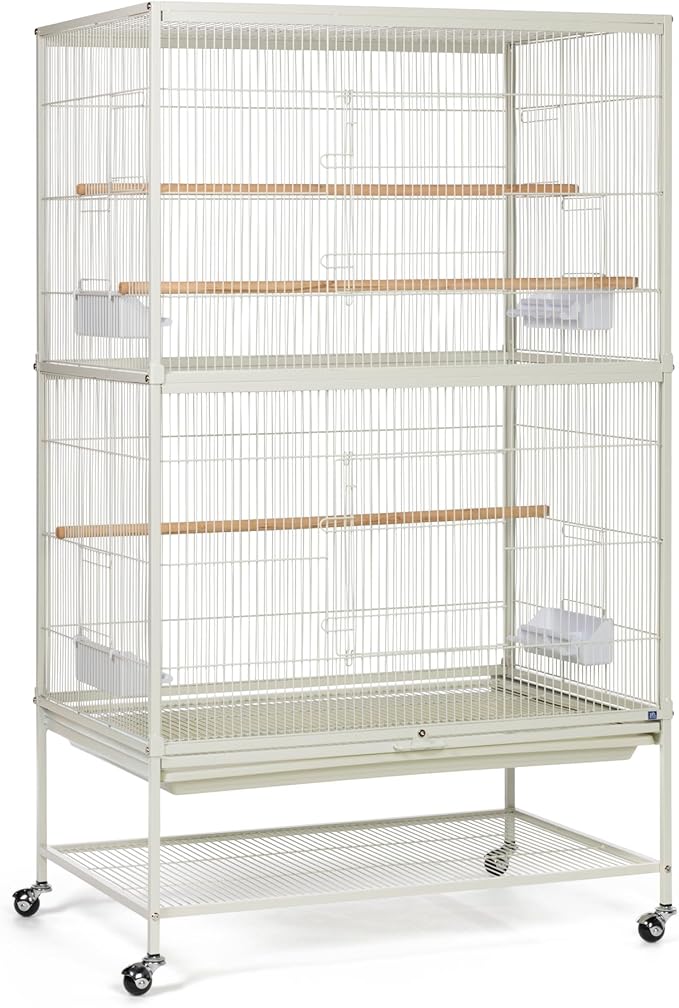
A sleep cage. Doesn't need to be fancy or expensive — it needs to be safe, dark, and quiet. Bar spacing appropriate to the species, one or two perches, water. A simple travel-appropriate or small spare cage works. If you need one, the compact sleep and travel cage style is a reasonable pick — light enough to move between rooms nightly, sturdy enough for nightly use.
Timers. A $10 lamp timer automates the sunset. Set the room lights to dim consistently and the routine builds itself.
A Realistic Nightly Routine That Works
Here's the schedule I give clients, adjusted for species and household. Assume a 9 p.m. bedtime target:
8:00 p.m. — last interaction, last fresh food removed (wet food shouldn't sit overnight anyway). Dim the main lights and kill the TV. The drop in activity and light is itself a signal; birds read environmental cues well.
8:30 p.m. — bird settles on its sleep perch in the sleep cage or main cage. Nothing dramatic, no fuss.
9:00 p.m. — cover goes on, night light (if used) goes on, room door closed, white noise on if the house is busy.
7:00 a.m. — uncover, lights up naturally if possible, fresh water and food.
That's 10 hours. Eleven or twelve is better, especially for hormonal birds, so shift the whole thing earlier if you can. During summer when dawn breaks at 5 a.m., blackout curtains on the sleep room are worth their weight in gold — or your bird will set its own wake time, and it won't be one you chose.
Expect a transition period. A bird used to staying up with the household may protest being covered earlier for a week or two. Hold the line. Keep the wind-down calm, offer a favorite treat at cover time, and most birds adapt within two to three weeks — and then, here's the payoff, they start going to sleep on their own without protest because their bodies finally get what they've been asking for.
Signs Your Bird Was Sleep-Deprived All Along
Give the new schedule four to six weeks, then look for these changes: quieter mornings, calmer evening handling, less frantic dusk screaming, smoother molts, and in hormonal birds, a visible dialing-back of territorial behavior. Owners also frequently report their bird talks and plays more, not less — a rested bird has energy for enrichment that an exhausted one spends on stress behaviors. According to the AVMA's guidance on companion bird welfare, appropriate rest and a consistent photoperiod are part of the environmental baseline responsible owners should provide, right alongside diet, space, and socialization.
If nothing improves after six weeks of genuinely consistent 10-to-12-hour nights, then dig deeper — that's when I'd start looking at diet, cage location, enrichment gaps, and a vet workup. But do the sleep fix first, because it's free, it's fast, and in my experience it's the answer more often than anything else in the cabinet.
Start tonight. Cover the cage, kill the lights, close the door. Ten hours minimum. Your bird has been waiting years for you to figure this out.
Related Reading
Want more on this topic? Check out our guides on household dangers pet birds safety guide, best finch cages perfect homes for small songbirds, best bird feather supplements molting care.