That Cloudy Tank Is Trying to Tell You Something
I once had a customer email me a photo of a tank so milky you couldn't see the driftwood two inches behind the glass. Her fish were fine. Her parameters were fine. She'd changed nothing. And that's the thing about cloudy water: the appearance alone tells you almost nothing until you know what color the cloud is and when it showed up. White haze, green tint, brown dust, and a tank that clouds overnight are four completely different problems with four completely different fixes.
I've been keeping tanks for over fifteen years and I've seen every flavor of this go wrong, including the classic beginner move of draining the whole tank, scrubbing everything, and starting over. That usually makes things dramatically worse, because the cloud in most new tanks is bacteria, and bacteria comes back with a vengeance when you wipe out its competition. So before you touch anything, read this. Diagnose first. Then fix.
Cause #1: Bacterial Bloom (White, Milky, Worst in New Tanks)
This is the big one. If your water looks like someone poured a drop of milk into it, evenly cloudy from top to bottom, with no green tint, you almost certainly have a heterotrophic bacterial bloom. These bacteria feed on dissolved organic material in the water column, and they multiply insanely fast, sometimes doubling in under an hour. That's why a tank can go crystal clear at 8 a.m. and look like skim milk by dinner.
Bacterial blooms are most common in the first two to six weeks of a new tank, because you have organic waste but not yet a stable colony of nitrifying bacteria competing for space. But they also happen in established tanks after overfeeding, a dead fish you didn't find, a filter that got rinsed in untreated tap water, or a decor piece with trapped gunk that finally released. I've seen a bloom trigger from a single rotting wafer buried under a rock for a week.
Here's the part nobody wants to hear: a bacterial bloom is mostly self-limiting. The bacteria consume the available organics, crash, and the water clears on its own, often within three to seven days. Your job is to not panic. Keep the lights on a normal schedule, cut feeding to once every other day, and do a 20-30% water change every couple of days to keep ammonia from spiking as the bloom dies off. Do not tear the tank down. Do not replace your filter media. If you nuke the biology, the bloom comes back worse.
One safety note: cloudy water plus fish gasping at the surface means the bloom has consumed enough oxygen to become dangerous. That's the one scenario where you should act aggressively, with a large water change and increased aeration. According to the Food and Drug Administration's guidance on ornamental fish keeping, deteriorating water quality is the single most common underlying stressor behind disease outbreaks in home aquariums, so a bloom paired with lethargic fish deserves immediate attention rather than a wait-and-see approach.
Cause #2: Green Water (Free-Floating Algae, Photosynthesis Gone Wild)
Green water is unmistakable. The tank looks like pea soup. It's caused by single-celled algae suspended in the water, and unlike surface algae, you can't scrub it off because there's nothing to scrub.
The recipe for green water is simple: light plus nutrients. Tanks near a sunny window get it constantly. So do tanks with the light on twelve hours a day, or tanks where nitrates have crept above 40-50 ppm because water changes got skipped. I've personally watched a 20-gallon tank turn solid green in four days after its owner moved it three feet closer to a south-facing window. Light is that powerful a variable.
The fix is a blackout. Cover the tank completely, towels over all sides, lights off, for three to five days. Fish tolerate this fine, plants survive it with some grumbling. The algae can't photosynthesize, dies, and gets pulled out by your filter and water changes. Do not do the blackout while feeding normally. Cut back, since the dying algae adds to the organic load. Afterward, address the root cause: move the tank out of direct sun, drop the photoperiod to 6-8 hours, and get nitrates under 20 ppm with regular water changes. A UV sterilizer is the nuclear option for chronic green water, and honestly, for some tanks it's the only thing that works, but fix the underlying nutrient and light imbalance first or it just comes back.
Cause #3: New Substrate Dust (Brownish-Gray, Appears Instantly)
If your tank clouded up within minutes or hours of adding new gravel or sand, congratulations, you have the most harmless problem on this list. New substrate, especially cheap gravel that wasn't rinsed, carries rock dust and fines that suspend in water. Some substrates, like clay-based planted tank soils, leach fine particles for days no matter how well you rinse them.
The fix is mechanical: your filter catches it, you rinse the filter media in removed tank water, repeat. Typically three or four filter cleanings over a week and the tank clears. This is where a fine filter pad or polishing floss earns its keep. You can add a fistful of it to your filter, toss it when clogged, and speed things up dramatically. Do one water change the next day if the cloud is thick, but mostly just let the filter do its job.
Cause #4: Dissolved Minerals and Tap Water Chemistry (White Cloud That Never Fully Clears)
This one fools people because it looks like a bacterial bloom, but the timing is different: it appears immediately after a water change and clears partially over hours as the water settles. Very hard tap water, or water from a source with high dissolved solids, can cloud when it hits the tank, especially after the pH shifts. This is sometimes a temporary precipitation, sometimes it's just your water.
Test your tap water straight from the faucet with a total dissolved solids meter if you can borrow one, or look up your municipality's annual water quality report. If your tap reads very hard, the fix is different from everything above: you either mix in reverse osmosis water, run a conditioner designed to bind minerals, or simply accept some haze. Fish don't care about clarity nearly as much as we do. I always tell people this: fish live in tea-colored Amazon rivers and mud-brown floodplains. Your fish cannot tell the tank is cloudy. Cloudy water is an aesthetic problem and a diagnostic clue, not automatically a fish emergency.
Cause #5: Driftwood Tannins (Yellow-Brown Tea Color)
Technically this isn't cloudiness, it's coloration, but it lands in my inbox constantly. New driftwood, especially malaysian and mopani wood, leaches tannins for weeks to months, turning the water amber like weak tea. The water stays perfectly clear otherwise. Shine a flashlight through it, you'll see clarity, just tinted.
Tannins are harmless and honestly beneficial for many fish. According to research published through the University of Florida's tropical aquaculture program, humic substances like tannins have mild antibacterial and antifungal properties and are a natural component of blackwater habitats where many ornamental species evolved. South American fish, bettas, tetras, and corydoras in particular do well with some tannin staining. If you hate the look, do larger weekly water changes, boil the wood before adding it next time, or run activated carbon in your filter, which removes tannins effectively.
The 60-Second Diagnostic Flowchart
Here's the quick version I use. When did it start? Immediately after adding substrate: dust, wait it out. Within minutes to hours of a water change: mineral precipitation, test your tap. Developed over days in a tank under six weeks old: bacterial bloom, cut feeding, be patient. Turned green gradually with lights on: algae, blackout. Yellow-brown but clear: tannins, optional carbon.
Now look at the cloud itself. Evenly milky white throughout: bacteria. Green tint, worse near the light: algae. Settles into a layer on the glass and decorations: particulates, mechanical filtration problem. Clings in corners where flow is dead: detritus, your circulation needs help.
Then check the fish. If they're eating, swimming normally, and not gasping, you have time. If they're at the surface piping or hiding and clamped, that cloudy water is masking a water quality crash, and you should test ammonia immediately and do a 40-50% water change today, not tomorrow. Keep a bottle of dechlorinator on hand at all times for exactly this scenario, something like API Stress Coat is a solid staple to keep in your fish cabinet because untreated tap water will kill the beneficial bacteria you're depending on.
What NOT to Do (I've Made These Mistakes)
Don't do a 100% water change. You'll reset the biology and extend the bloom by weeks. Don't scrub your filter media under tap water. The chlorine kills your nitrifiers, and the heterotrophs rebound faster than the good bacteria, so the bloom gets worse. Don't add clarifier chemicals as a first resort. Flocculants work by clumping particles so the filter catches them, which is fine for dust, but they do nothing for bacterial blooms or green water, and overdosing them can gum up fish gills. Don't add more fish, and don't tear the whole tank down. The teardown is the one that kills tanks. I did it once in year two of the hobby, drained everything, bleached the decor, and spent the next month fighting ammonia because I'd destroyed my cycle for no reason.
And please don't turn the lights off for two weeks to fix a bacterial bloom. Bacteria don't need light. That trick is for algae only.
Prevention: The Boring Habits That Keep Water Clear
Feed less than you think you should. Most blooms and most algae problems trace back to food going uneaten and rotting. Two small feedings a day, only what gets eaten in thirty seconds, is plenty for almost every community fish. Vacuum the substrate during water changes so organics don't accumulate. Don't overstock, and match your stocking to your filtration instead of the other way around.
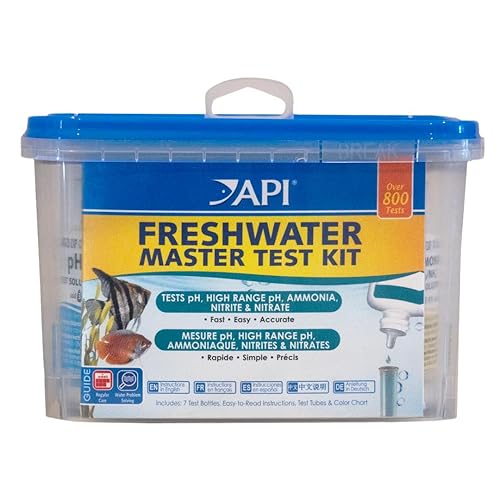
Test your water weekly, at minimum for ammonia, nitrite, nitrate, and pH. A liquid test kit like the API Freshwater Master Test Kit costs about the same as four bottles of guesswork and it turns mystery clouds into a solvable problem in ten minutes. The number of people who call me about cloudy water and have never once tested their tank is genuinely staggering, and half of them discover a nitrate reading of 80 ppm that explains everything, the cloud included.
If particulates are your recurring issue, add a layer of filter floss to your filter and check that your flow rate matches your tank size. A filter rated for a 20-gallon tank on an actual 20-gallon tank with live fish and gravel is undersized. I size up on every tank I set up now, and I haven't fought chronic haze in years.
When Cloudy Water Actually Means Emergency
Three situations, and only three, turn cloudy water into a same-day emergency. First, fish gasping at the surface after lights-out, which signals oxygen depletion from a massive bacterial bloom, do a big water change and add an airstone immediately. Second, a sudden white cloud plus an ammonia reading above 0.25 ppm, which means something died in the tank or the cycle crashed, find the body, change water daily until it stabilizes. Third, cloudy eyes or white patches on the fish themselves alongside cloudy water, which points to a bacterial infection rather than a water column bloom, and that needs quarantine and treatment, not just water changes.
For oxygen emergencies and general resilience, an air pump with a decent stone is cheap insurance. Something like the Tetra Whisper air pump sits quietly on the shelf until the day it matters, and that day always arrives eventually in this hobby.
The Takeaway I'd Give a Friend
Cloudy water is a symptom, and the treatment depends entirely on which symptom it is. Match the color to the cause, check your fish before you check your feelings, and give biology time to do its job. Most white clouds clear in under a week if you just stop feeding so much and leave the filter alone. Most green water dies in a three-day blackout. And if your tank is six weeks old and milky, that's not a failure, that's the normal awkward teenage phase of a new aquarium. Test, wait, do modest water changes, and resist the urge to scrub everything. Patience fixes more cloudy tanks than every bottle on the fish store shelf combined.
Related Reading
Want more on this topic? Check out our guides on best betta fish tanks bowls solo habitat setups, best aquarium fish acclimation drip acclimator, best aquarium power filters hob.