How to Quarantine New Fish: A Step-by-Step Guide That Actually Saves Your Tank
Disclosure: PawCritic is reader-supported. A few links below are Amazon affiliate links, and we may earn a small commission if you purchase through them at no extra cost to you.
Here's the sentence I hear most often when someone's tank crashes: "But the fish looked totally fine at the store." Yeah. They always do. That's the whole problem.
Diseases don't announce themselves at the checkout counter. The fish swimming around in that store tank might be carrying ich, velvet, or columnaris with zero visible signs — because it's stressed, its immune system is running on fumes, and the pathogen is still building up numbers. By the time you see spots, flashing, or gasping at the surface, whatever it is has been in your tank for days. And it's been busy.
Losing the $6 fish stings. Losing the 40-gallon community you've kept for two years is a different kind of pain entirely. I've seen one unquarantined betta take out an entire community tank in nine days. Nine. The owner spent the next month doing emergency water changes and watching the survivors hover in the corners like they knew what happened.
Here's the thing nobody tells beginners: none of that had to happen. A quarantine tank is a bare, simple, isolated setup where new fish spend two to four weeks before they ever meet your other fish. The World Aquatic Veterinary Medical Association (WAVMA) recommends a minimum of two weeks of quarantine for new arrivals, and most experienced keepers I know double that without blinking. It's the cheapest insurance in the hobby, and almost nobody does it.
Why Two Weeks Isn't Just a Suggestion
Let's talk about what you're actually waiting for. The most common aquarium parasites and bacteria run on predictable timelines. Ich (Ichthyophthirius multifiliis), the white-spot parasite, has a life cycle of roughly a week at tropical temperatures — and crucially, the stage that lives on the fish is the only one you can see. The reproductive stages sit in the water and on the substrate, invisible, waiting. Velvet moves faster and kills faster. Columnaris can go from "that fish looks a little off" to "that fish is dead" in under 48 hours.
Research on ornamental fish disease transmission keeps circling back to the same point: most outbreaks in home aquaria trace back to fish that were added with no isolation period at all. Quarantine isn't about catching everything — no protocol can do that. It's about catching the common stuff, in a tank where treating it is cheap and easy, before it meets your established fish. Your display tank is not the place to learn this lesson.
What You Actually Need (It's Less Than You Think)
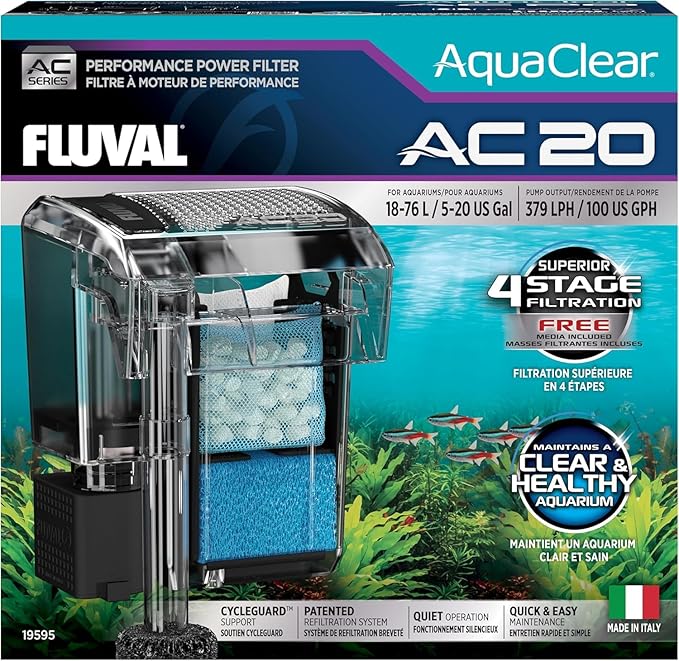
People overcomplicate this. A quarantine setup is: a 10 to 20-gallon tank, a lid, a heater, a simple filter, a hiding spot, and a liquid test kit. That's it. No substrate. No plants. No decor you care about. A bare tank is easier to clean, easier to medicate, and easier to see problems in — and if you do have to treat something, you won't be mourning your hardscape.
The filter is where the magic happens. The single best trick in the hobby: keep a spare sponge filter running in your display tank at all times. It costs nothing to run, and it means you always have a cycled, bacteria-loaded filter ready for quarantine duty the moment you need one. If you've never cycled a tank before, or you're fuzzy on what "cycled" even means, our full walkthrough of the nitrogen cycle is worth fifteen minutes of your time before you go further.
If you'd rather not piece everything together from scratch, all-in-one quarantine systems exist — tank, lid, and filter in one box. That's what I point people to when I know they'll skip the DIY out of sheer procrastination, because a mediocre quarantine tank you actually set up beats a perfect one you never build.
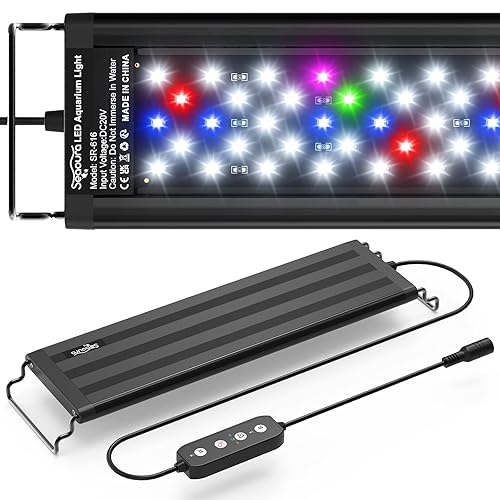
And please: get a liquid test kit, not strips. Strips are fine for a rough weekly glance in an established tank. For quarantine, where you're watching ammonia and nitrite climb in a small volume of water, you want numbers you can trust. This kit reads ammonia, nitrite, and nitrate without drama, and it's the one I've recommended for years.
One more thing worth having: a lid. Fish jump, and new fish in a strange tank jump more — I've lost two fish to a bare open quarantine tank, and both of them were perfectly healthy. A cheap glass or plastic cover costs five dollars and removes an entire category of tragedy.
Step 1: Set Up Before You Buy the Fish
I can't stress this enough — the quarantine tank needs to be running before the fish come home, not as a frantic weekend project after. Set it up a few days ahead: fill it, heat it, match the temperature to your display tank, and drop in that cycled sponge filter from your main tank. Add an air pump to drive the sponge filter if it's not powered by a powerhead.
Let it run for 48 to 72 hours. Test the water. If ammonia and nitrite read zero, you're ready. A warm, filtered, cycled quarantine tank is a boring place — and boring is exactly what you want. A simple air pump driving the sponge filter is all the flow you need; you're not trying to win awards here, just keep the water moving and the bacteria fed.
Step 2: Acclimate Like the Fish's Life Depends on It (Because It Does)
Float the bag in the quarantine tank for fifteen minutes so the temperatures equalize. Then drip-acclimate — let tank water slowly drip into the bag, cup, or bucket over 30 to 45 minutes. This sounds fussy, but the fish has been through shipping or a store tank; it's already stressed. Fast changes in temperature and chemistry can kill it before any disease gets the chance.
Turn the lights off after you release the fish. Leave them off for the first day. Don't feed on day one. The mistake I made early on, and the one I see constantly: pouring the bag water into the tank. You're not just adding fish — you're adding whatever is in that bag water, and there's no reason to import someone else's water problems into your setup. Net the fish out, leave the water behind.
Step 3: The Observation Schedule
Now you watch. Here's the rhythm I use:
Days 1–2: The fish hides. Maybe a lot. This is normal — don't panic and don't feed yet. Watch from across the room. Hiding is fine; clamped fins, gasping, or lying on the substrate is not.
Days 3–5: First feeding. Offer a small amount of a high-quality food and see if the fish eats. Loss of appetite for more than a day or two after settling is one of the earliest red flags there is. This is also when mild cases of ich start showing as a few pinhead spots on fins.
Week one: Full body check, twice a day. Look for spots, cloudy eyes, frayed fins, stringy white feces, flashing (rubbing against decor), and rapid gill movement. Take a photo every day — I'm serious, it helps you spot slow changes.
Week two: The danger window. Most common parasites complete at least one full cycle in this stretch, so anything latent tends to surface now. Keep the schedule: check, feed, observe, log.
Water quality is part of the observation. Test ammonia and nitrite every other day during that first week — a small tank with a light bioload can still spike if your cycled media didn't carry enough bacteria. If ammonia climbs above 0.25 ppm, do a 25% water change with dechlorinated water at matching temperature. You're not just waiting out the clock here; you're keeping the fish healthy enough that its immune system can do its job.
Not sure whether what you're seeing is a problem or just fish behavior? Our guide to common aquarium fish diseases covers the main offenders with photos of what each one looks like in the early stages — bookmark it now, before you need it.
Step 4: Treat When You See Something, Not Before
Here's where a lot of well-meaning owners go sideways: they dose the quarantine tank with every medication they own, just in case. Don't. Prophylactic medication stresses fish, nukes the good bacteria in your filter, and — this is the part people don't consider — breeds resistant strains of the exact pathogens you're trying to avoid. The whole point of quarantine is that you don't have to guess.
If something shows up, identify it first. Mild ich or velvet in the early stages often responds to a raised temperature and aquarium salt long before you need the heavy artillery. If a specific disease is confirmed, then you treat for that disease specifically, at the labeled dose, in a tank where the cost of treatment is low.
The rule I give every owner: if you can name the disease, you can treat it. If you can't name it, you're guessing — and fish don't do great with guessing games.
Step 5: How Long Is Long Enough?
Two weeks is the floor. For most community fish bought from a reputable store, two weeks of clean observation is genuinely reasonable. But I'd stretch to four weeks for goldfish (they're hardy carriers), for cichlids (aggression plus disease is a nasty combo), and for anything wild-caught. Wild-caught fish carry a bigger, weirder parasite load, and four weeks is the difference between "probably fine" and "actually fine."
Plants and invertebrates are their own category. Plants can carry snail eggs, hitchhiker pests, and pathogens — a bleach dip or potassium permanganate rinse before they hit the display tank is standard practice. Inverts, meanwhile, are often sensitive to the copper-based medications you'd use for fish, so they get quarantined separately and medicated differently, if at all. Different arrivals, different risk levels — that's the whole game.
One detail that trips people up: quarantine length assumes tropical temperatures. At 78–80°F, disease cycles run fast, which is what makes a two-week watch meaningful. If your quarantine tank runs cooler — say, for goldfish at 68°F — disease cycles slow down, and you should extend the quarantine to match. Cooler water doesn't mean less risk. It means a slower reveal, so give it more time.
Quarantine Isn't Just for New Fish
Once you get into the habit, you'll find yourself using that tank for more than new arrivals. It's the right place for any fish that starts showing signs of illness — pulling a sick fish out of the group gives you room to treat aggressively without medicating healthy fish that don't need it. It's where I put fish after fights, when a fin is torn or scales are missing, so they can heal without being harassed by the rest of the crew. And it's the staging area whenever you're moving fish between tanks. Every fish that changes tanks should pass through quarantine, even fish you've owned for years — because the tank you're moving them into is the one you're protecting.
This is also how you handle that impulse buy problem, by the way. You know the one: you walk past the store display, the fish locks eyes with you, and suddenly you own a pleco. If the quarantine tank is already set up and running — and it should be, permanently — then the impulse buy is a five-minute addition instead of a gamble. If it's not set up, the honest move is to walk away and come back tomorrow when the tank is ready. The fish will still be there. Your tank's health doesn't have to be the price of your impulse.
The Mistakes That Undo Everyone
I've watched the same five mistakes end more quarantine tanks than disease ever has:
Using an uncycled filter. Ammonia spikes in a small tank fast, and the fish you're trying to protect ends up poisoned by your "safety" tank. This is why the spare sponge filter in the display tank trick is non-negotiable.
Quarantining in a bowl. A bowl with daily 100% water changes is a stress machine. Volume is your friend. Ten gallons minimum, even for a single small fish.
Skipping the heater. Temperature swings of several degrees a day suppress the immune system — the exact thing quarantine is supposed to protect. Set it, verify it with a thermometer, walk away.
Overcrowding the quarantine tank. The point is isolation. One new arrival, or one shipment that arrived together, per quarantine cycle. Don't turn it into a group project.
"I'll just watch it in the main tank." You won't. Nobody does. By the time you notice something, it's already been contagious.
The Bottom Line
Quarantine is boring. That's the point. It's two to four weeks of a heater humming and a sponge filter bubbling and a fish that mostly just… swims around. And every single day of that boredom is a day your display tank isn't at risk.
Here's your checklist, pinned to the wall above the tank: bare tank set up and cycled before the fish arrives; drip acclimation, lights off, no feeding on day one; two checks a day for two weeks minimum; treat only what you can name; and never, ever pour the bag water into the tank. If you're new to the hobby and any of this sounds foreign — especially the cycling part — our step-by-step guide to the nitrogen cycle fills in the gaps. Do all of this, and the worst outcome is you were bored for a month. Skip it, and you're rolling dice with every fish you own.
A few weeks of boring beats one bad weekend of emergency water changes. Every time.