Crested Gecko Care for Beginners: Setup, Feeding & Handling
Disclosure: PawCritic is reader-supported. A few links below are Amazon affiliate links, and we may earn a small commission if you purchase through them at no extra cost to you.
The crested gecko is the reptile equivalent of a Golden Retriever: popular, forgiving, and genuinely nice to be around. Scientists thought they were extinct until 1994, when an expedition in New Caledonia found a few hanging out in a pine tree. Now they're everywhere — and for good reason. They don't need live insects as a staple, they don't bite, they don't demand a huge tank, and they tolerate handling better than almost any lizard you can buy.
But "forgiving" isn't "no maintenance." I've bred these geckos for six years and I've seen beginners kill them with kindness — heat lamps, oversized enclosures, overfeeding, grabbing tails. The good news: the rules are simple. Get these seven steps right and you'll have a gecko that lives 15-20 years.
Quick stats before we start: adults run about 8 inches from nose to tail tip, weigh 35-45 grams, and cost anywhere from $40 for a common pattern to $400+ for a rare morph. The setup runs $150-300 depending on how fancy you go. That's cheap compared to most reptiles — a proper bearded dragon rig costs double that — which is one more reason cresties dominate the beginner market.
If you're still deciding between species, our first reptile buying guide compares cresties against other beginner options.
Step 1: The Enclosure — Vertical, Not Bigger
Crested geckos are arboreal. They live in trees, they climb, and they want height, not floor space. The standard adult home is an 18x18x24-inch tank — 18 wide, 18 deep, 24 tall. A baby can start in a 12x12x18, but most keepers skip ahead and put a small gecko in the adult tank with plenty of foliage to hide in.
Front-opening doors are worth the extra money. I've said it a hundred times: top-opening tanks make you reach down into your gecko's world like a giant bird of prey, and cresties notice. A front-opening enclosure like this glass vivarium makes feeding and misting feel normal for both of you.
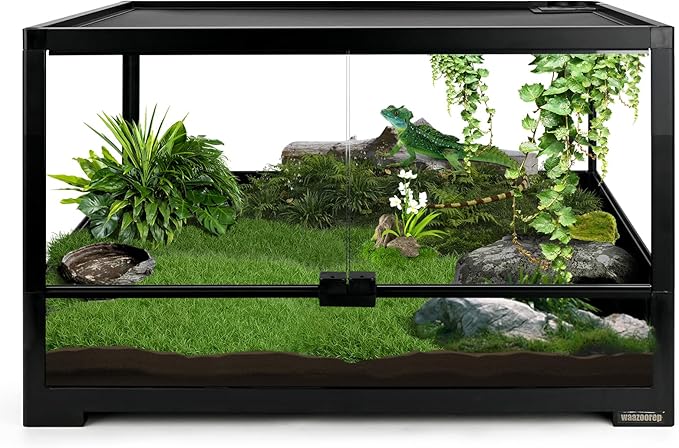
One mistake I see constantly: putting a baby in a huge tank "so it has room to grow." A 2-gram hatchling in a 30-gallon tank can't find its food dish and gets stressed. Foliage fixes most of it — fake plants and vines give them cover — but if your gecko looks lost, downsize or clutter up.
Your full shopping list for Step 1: the enclosure itself, a mesh or glass top (mesh helps ventilation), at least one hide, fake or live plants, cork bark or branches for climbing, a food dish that clips to the wall up high, and a digital thermometer plus hygrometer to monitor conditions. Get everything before the gecko. I cannot stress this enough — the tank should be running for a full week before the animal moves in.
Step 2: Temperature — Cooler Than You Expect
Here's the part that trips up everyone coming from bearded dragons: crested geckos don't want a basking spot. They want 72-78°F (22-26°C) during the day, and a dip into the mid-60s at night is fine. Above 80°F they start to cook; prolonged heat over 85°F can kill them. No heat lamp. No basking bulb. If your room is comfortable for you in a t-shirt, your gecko is fine.
If your house runs cold (below 68°F in winter), a low-wattage ceramic heat emitter on a thermostat is the safe fix — and see our UVB and lighting mistakes guide for why thermostats are non-negotiable on any heat source. But most keepers, most of the year, need zero heat. That's part of the appeal.
Step 3: Humidity — The Actual Job
Temperature is easy. Humidity is the job. Crested geckos need 50-60% humidity during the day and a spike to 70-80% after you mist in the evening. They drink water droplets off leaves — that's literally their water source — so misting isn't optional decoration, it's how they hydrate.
The routine: mist the walls and foliage in the evening, let it dry out during the day, repeat. A digital hygrometer (skip the analog ones, they drift) tells you whether you're in range. In winter or dry climates, a handful of damp sphagnum moss in a hide keeps a humid microclimate and smooths shedding — sphagnum moss like this is cheap and lasts for months.
Under-misting is the more common failure. Dry air leads to stuck shed, which leads to lost toes. Check the gecko after each shed — leftover skin on toes or tail means bump the humidity up. Cresties shed in pieces, not one clean skin like snakes, so a bit of flaking is normal; skin that stays stuck for more than a day is not.
If you travel or work long hours, a misting system takes over the evening spray on a timer. They're not expensive, and they pay for themselves the first time you're stuck at the office past lights-out. Until then, a plain spray bottle with distilled or dechlorinated water does the job fine — just don't spray the gecko directly, spray the leaves and glass around it.
Step 4: Lighting — Keep It Simple
Crested geckos are nocturnal, so they don't need UVB the way a bearded dragon does. A low-level UVB (2-5%) is a nice-to-have that some keepers argue improves long-term health, but it's optional. What's not optional: a day/night cycle. A simple LED on a timer for 10-12 hours a day keeps their internal clock honest, and if you have live plants, they'll need the light anyway.
If you do go the UVB route, do it right — the cheap coil bulbs are worse than nothing. The UVB mistakes guide explains why.
One more lighting note: cresties are crepuscular, meaning they're most active at dawn and dusk, so they'll spend a lot of time lounging in shadow during the day. That's normal — don't interpret it as hiding or stress. A gecko sprawled on a branch mid-afternoon, eyes half closed, is a gecko that feels safe. The ones that are stressed press themselves flat against glass and stay frozen. Learn the difference and you'll worry a lot less.
Step 5: Substrate — Match It to the Gecko's Age
Babies and quarantine tanks: paper towel. It's cheap, sterile, and you'll spot poop immediately, which is how you catch health problems early. Adults: coco fiber, a reptile-safe soil mix, or a planted bioactive setup. Avoid pure sand and anything dusty — cresties lick things, and ingested substrate can cause impaction, though adults handle a natural loose substrate fine.
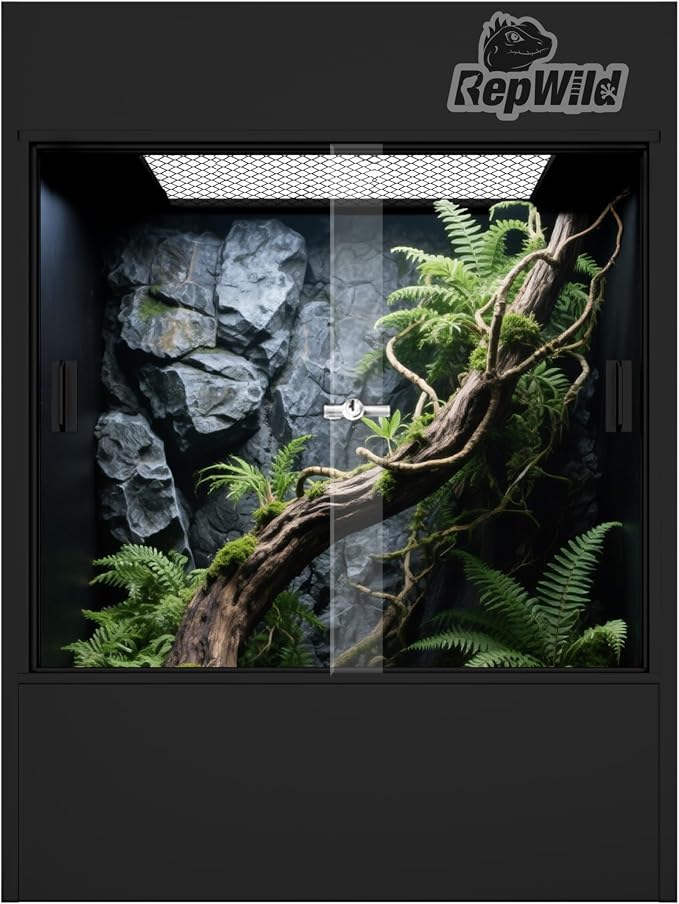
Whatever you choose, add structure: cork bark, branches, vines, fake or live plants. A crested gecko that can't climb isn't in a home, it's in a box. Fill the top half of the tank — that's where they live.
Step 6: Feeding — The Easiest Part of the Whole Hobby
This is the crested gecko's superpower: they eat a powdered complete diet. Repashy, Pangea, and other brands make Crested Gecko Diet (CGD) — you mix the powder with water into a smoothie, and it's genuinely complete nutrition. No crickets required, no gut-loading, no dusting at every feeding.
Schedule: babies and juveniles get fresh CGD daily or every other day; adults every other day or every 2-3 days. Put a small dish of it up high (they eat in the trees), offer it in the evening, remove leftovers in the morning. Most adults also appreciate a feeder insect once a week or so — crickets or dubia roaches, dusted with calcium. If you're offering insects, calcium powder with D3 is the standard supplement — see our MBD prevention guide for why calcium matters so much in reptiles.
Overfeeding CGD is hard to do. Overfeeding insects is easy. Insects are a treat, not the main course.
Step 7: Handling — Short, Slow, and Never by the Tail
Crested geckos are handleable, but they're not lap lizards. They're fast, they jump, and they don't love being held for long stretches. The right way: open the door, let the gecko walk onto your hand on its own (don't grab), keep sessions to 5-10 minutes, and don't do it more than a few times a week. Evening is best — that's when they're awake and calm.
The tail thing: crested geckos drop their tails when scared, and unlike leopard geckos, they never grow them back. A gecko without a tail is fine, healthy, and lives a normal life — but it's a sign your handling or setup is stressing it. Never grab the tail. If it jumps, let it land; don't snatch.
The Mistakes That Actually Kill Cresties
In six years, every sick or dead gecko I've seen traces back to one of these:
- Heat: a basking bulb or heat mat cranked too high. Above 85°F for hours is fatal. No heat source unless the room is genuinely cold.
- Dryness: misting once a day in a dry climate, then wondering why the shed is stuck.
- Too big too soon: a hatchling in a huge bare tank, stressed and unable to find food.
- Grabby handling: grabbed or dropped tails, chronic stress, appetite loss.
- Insect-only diets: feeding only crickets and no CGD — that's like feeding a dog only treats.
- No vet care: waiting until the gecko stops eating for two weeks before calling anyone.
Crestie Questions I Get All the Time
Do they need company? No. Crested geckos are solitary and do perfectly well alone. Two males will fight; a male and female will breed, which you don't want unless you're prepared for eggs and babies. One gecko, one tank.
Do they bite? Rarely, and it barely counts as a bite when they do — a startled crestie might nip, but they can't break skin and they'd rather jump than fight. The bigger risk is them leaping off your hand, so handle low over a soft surface.
How big do they get? About 8 inches including the tail, with females often slightly larger than males. They're small enough that a 18x18x24 tank feels like a mansion.
Will my female lay eggs? If she's ever been housed with a male, she can lay infertile eggs — females can store sperm for months. It's normal. Just provide a small laying box with moist substrate and let her get on with it.
Is a tail-less gecko broken? No. They drop tails as a defense and live perfectly normal lives without one. It's not a health problem; it's a sign something scared them, so check your handling and setup.
Can I feed only CGD forever? Yes — that's the point. CGD is complete nutrition. Insects are enrichment and variety, not a requirement, which is exactly why this species works for people who can't stomach a cricket bin.
A Realistic Weekly Schedule
- Daily: mist in the evening, check temperature and humidity, offer fresh CGD (or every other day for adults).
- Weekly: remove leftovers, spot-clean poop, check for stuck shed, give toes and tail a gentle once-over.
- Monthly: deep-clean the food dish, refresh substrate as needed, check the hygrometer battery.
- Yearly: a vet visit with someone who actually sees reptiles.
When to See a Vet
Find a reptile vet before you need one. The Association of Reptilian and Avian Veterinarians (ARAV) keeps a searchable directory of vets who genuinely see reptiles — a regular dog-and-cat clinic usually doesn't know what to do with a gecko. According to the AVMA, reptiles should get annual wellness exams just like dogs and cats. A gecko that stops eating, has crusty eyes, or is losing weight needs a vet within days, not weeks. Our gecko health problems guide covers the warning signs in more detail.
The Bottom Line
Here's what I tell everyone: a crested gecko is the best first lizard for 90% of people — but buy the setup before the gecko. Enclosure, hygrometer, food, foliage, all of it, running for a week before the animal arrives. Then add a gecko, mist every evening, and enjoy the easiest reptile on the market. Fifteen years from now you'll still have the same little weirdo climbing the same branch, and you'll be glad you did it right the first time.
One last thing: when you bring the gecko home, leave it alone for the first week. No handling, just feeding and misting. Let it settle, watch it eat, and let it learn that the big warm thing outside the glass brings dinner. That first week of patience is what separates the keepers who have a gecko for 15 years from the ones who re-home theirs in six months.