How Often Should You Change Aquarium Water? The Real Schedule
Disclosure: PawCritic is reader-supported. Some links below are Amazon affiliate links, which means we may earn a small commission if you buy through them — at no extra cost to you.
Nobody tells you this when you buy your first tank: the water changes are the hobby. Everything else — the fish, the plants, the scaping, the lights — is just the part you get to enjoy. The actual work is hauling buckets, and the people who last in this hobby are the ones who figured out a schedule that doesn't feel like a chore.
I started keeping fish in a 10-gallon when I was fifteen and did a 100% water change every single week because that's what the guy at the shop said to do. My fish died. All of them. Because I was nuking the biofilter every Sunday and re-cycling the tank from scratch, and the ammonia spike did what ammonia spikes always do. Took me years to understand I had the right chore and the wrong method — like mopping a floor by flooding the room.
So here's what I actually do now, what I tell friends when they set up their first tank, and the schedule that keeps fish healthy without turning aquarium keeping into a second job.
Why Water Changes Exist at All
Fish live in their own toilet. That's the blunt version, and it's the whole reason any of this matters. Fish produce ammonia constantly — through their gills, through their waste, from uneaten food rotting on the substrate. A cycled tank's bacteria convert that ammonia into nitrite and then into nitrate, which is far less toxic but still accumulates. There is no filter in the world that removes nitrate. Not the canister, not the sump, not the $400 one with the app. The only way nitrate leaves a closed tank is if you physically remove water that contains it and replace it with fresh water.
Saltwater reef keepers will tell you about protein skimmers and refugiums and macroalgae export, and all of that genuinely helps. But in a freshwater community tank — and honestly in most reef tanks too — the water change is the primary export system. According to the Merck Veterinary Manual, poor water quality is the single most common underlying cause of disease in pet fish, ahead of pathogens, ahead of nutritional problems. Fish don't usually catch something; they usually get sick because the water they're swimming in is slowly poisoning them, and then the pathogen that was always there finishes the job.
That reframes the whole question. You're not changing water because your fish look dirty. You're changing water because nitrate is climbing, minerals are depleting, and hormones and waste compounds are concentrating. The fish looks fine right up until it doesn't.
The Honest Schedule (By Tank Type)
| Tank Type | Water Change | Why This Frequency |
|---|---|---|
| Established community tank (lightly stocked) | 25% every 2 weeks | Slow nitrate buildup; most forgiving schedule that still works |
| Standard community tank (typical stocking) | 25% weekly | The default. Most tanks fall here. |
| Heavily stocked or messy eaters (goldfish, Oscars, cichlids) | 30–50% weekly | Huge bioload; nitrate climbs fast and these fish produce a lot of waste |
| Planted tanks | 20–25% weekly or biweekly | Plants consume nitrate, which buys you time — but they don't remove everything |
| Betta in a small tank (5 gal or less, no filter) | 50% twice a week | No biological filtration; you ARE the filter |
| New/uncycled tank (first 6–8 weeks) | 25% every 3–4 days | Protects fish during the nitrogen cycle spike |
| Saltwater / reef | 10–15% weekly | Smaller, steadier changes protect stability of the system |
If you only remember one number, remember 25% weekly. It's not magic — it's just the amount that removes meaningful nitrate without ever shocking the tank or disrupting the filter bacteria that live in your media, not your water column. A 25% change leaves 75% of the water untouched. The bacteria on your filter media, your decor, and your substrate barely notice. That's the point.
Signs You're Not Changing Enough Water
Your test kit will tell you before your fish will, and that's the whole reason to own one. Test for nitrate weekly and you'll see the trend long before anything looks sick. But here are the visible signs that you've slipped:
- Nitrate reading above 40–50 ppm on a liquid test — the single most reliable indicator
- Green water or algae growing faster than you can clean it (nitrates are fertilizer)
- Fish gasping at the surface in the morning
- Sudden "mystery" deaths of one fish at a time, weeks apart, with no visible symptoms
- Sluggish behavior, clamped fins, faded color that isn't disease-specific
- That smell. A healthy aquarium doesn't really smell. A neglected one does.
If you see several of those, don't panic and don't do a 100% change to "fix" it fast — that's how you shock the fish and crash the cycle. Do a 50% change, test again in 48 hours, then get back on the 25% weekly rhythm. It takes a few weeks for nitrate to drop to baseline, but it will.
And if you're still fuzzy on how the nitrogen cycle actually works under the hood, our complete guide to cycling an aquarium explains the ammonia-to-nitrite-to-nitrate pipeline properly — it's twenty minutes that will save you from a lot of dead fish.
How to Do a Water Change Right (Step by Step)
Most of the mistakes people make aren't in the frequency. They're in the execution. Here's the method I use, and it takes about fifteen minutes once you've done it a few times.
Step 1: Prep the new water first. Fill your bucket (or buckets) with tap water, add the dechlorinator/water conditioner at the dose for the full volume you're replacing, and let it sit. Temperature-match it to the tank using a thermometer — or just run the faucet until the temperature feels close and verify with a thermometer if you're nervous. A swing of more than 2–3°F stresses fish. Cold water from the tap dumped straight in is a classic way to knock a tank sideways.
Step 2: Turn off the heater and filter. You don't want the heater running while the water level drops below it — that's how heaters crack or cook themselves dry. The filter can stay on for the siphon part but should be off during a deep clean so you're not sucking gunk through the impeller.
Step 3: Siphon the gravel. Use a gravel vacuum — the wide-mouth siphon tube — and push it into the substrate in a grid pattern, letting the vacuum lift and drop gravel as it goes. This pulls out mulm (the decaying organic gunk) that sits between the grains, which is where a lot of ammonia actually comes from. You're removing water AND cleaning the substrate at the same time, which is why the gravel vacuum is the one tool you should own. Our guide to aquarium gravel vacuums and siphons covers what to look for if you don't have one yet.
Step 4: Stop at the target volume. For 25%, siphon until the bucket reaches a quarter of the tank's volume. Mark the bucket with a Sharpie line if you want to be precise — I did, and it removes all guesswork.
Step 5: Wipe the glass, trim plants, rinse decor while the water is low. Do your maintenance in the same session so you're not disturbing the tank twice.
Step 6: Refill slowly. Pour the fresh water back in gently — pour it over your hand, a plate, or a piece of decor so it doesn't blast the substrate and stir everything up. Then turn the heater and filter back on.
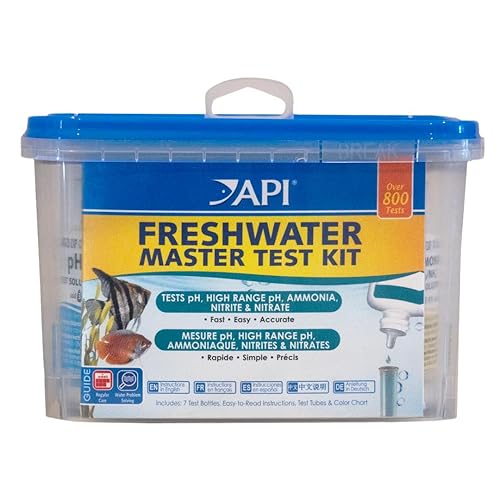
Step 7: Test. Once a week, test ammonia, nitrite, and nitrate with a liquid kit. This is the step everyone skips and the one that actually tells you whether your schedule is working. The API Freshwater Master Test Kit is what most of us use — it does hundreds of tests and the ammonia reading is actually legible, unlike strips. Keep a pack of quick-dip strips for a fast midweek glance if you like, but make decisions on liquid results.
The Mistakes That Turn Water Changes Into Fish Killers
Water changes are supposed to be the safest maintenance task in the hobby. They become dangerous through five recurring errors, and I've made all of them:
1. 100% changes. A total water change strips the tank of beneficial bacteria living in the water column (a small share of the total), shocks the fish, and can crash the cycle if you also cleaned the filter in the same session. There is almost never a reason to change more than 50–60%. Even after a disease outbreak, the standard advice is a series of large changes, not one total one.
2. Cleaning the filter on water change day. Filter media holds the majority of your biofilter. If you rinse it in tap water — which is chlorinated — you kill the bacteria, and if you do that on the same day as a big water change, you've double-stressed the system. Rinse filter media in a bucket of old tank water (the water you just siphoned out is perfect), and never on the same day as a water change.
3. Skipping the dechlorinator. Municipal tap water contains chlorine and often chloramine, both of which are lethal to fish and damaging to filter bacteria. If you're on a private well, you can skip it; if you're on city water, it's non-negotiable. And don't trust the "let it sit overnight" trick for chloramine — that only off-gasses free chlorine, not chloramine.
4. Cleaning the substrate too aggressively. Deep-vacuuming the whole tank every week isn't better — it's more disruptive. The gravel vacuum is a tool for removing mulm, not for giving the gravel a wash. Stirring the entire substrate layer releases trapped ammonia and can trigger a mini-cycle.
5. Ignoring the numbers because the fish look fine. Fish hide distress. By the time they look sick, the problem has been building for weeks. The whole point of weekly testing is to catch the trend before it becomes a symptom. If you want the reasoning laid out in detail, our guide to common aquarium fish diseases explains why water quality sits behind most of what gets misdiagnosed as illness.
Special Situations That Change the Schedule
Cycling a new tank. During the first 6–8 weeks, do smaller changes more often — 25% every 3–4 days — to keep ammonia and nitrite from peaking into the danger zone while the bacteria colony establishes. Test every couple of days during this phase. If you're starting with fish-in cycling, keep a bottle of bottled nitrifying bacteria on hand; Tetra SafeStart Plus is the one I keep on the shelf for jumpstarting a quarantine tank or rescuing a stalled cycle. It doesn't replace patience or testing, but it buys you time.
After medicating. Many medications instruct you to do a water change after the treatment course to remove residues, and you should follow that — but wait 24–48 hours after the last dose unless the label says otherwise, and test before and after.
Overfeeding accidents. Missed a feeding and dumped in double? Do an extra 25% change the next day. Same for a dead fish you found late — remove it, then change water. Decomposition spikes ammonia hard.
Moving or rescuing a tank. If you're breaking down and resetting a tank, that's a full restart, not a water change — treat it like a new cycle and test aggressively for weeks.
A Schedule That Actually Sticks
Honestly, the best schedule is the one you'll actually do, so make it easy on yourself:
- Pick a fixed day. Sunday morning, whatever. Tanks thrive on routine and so do you.
- Keep the gear where you'll see it — bucket, siphon, dechlorinator, test kit in one plastic bin.
- Pair the chore with something enjoyable — podcast, music, coffee. Fifteen minutes is nothing if it doesn't feel like a task.
- Keep a log. A sticky note on the stand with dates and nitrate readings. Trends matter more than single readings.
And if you're comparing filter options while you're at it, our canister vs. HOB filter comparison will tell you which type keeps your water cleaner with less effort — because a better filter doesn't replace water changes, but it does make them less frequent and less urgent.
My Take
People overthink water changes like they're a chemistry exam. They're not. It's removing a bucket of old water and adding a bucket of treated, temperature-matched new water, on a rhythm, and testing to confirm the rhythm works. The schedule above is a starting point, not scripture — your tank's bioload, feeding habits, and planting will nudge it one way or the other, and your test kit is the only authority that matters.
Set the alarm for Sunday. Test weekly. Change 25%. Watch the nitrate number stay low and the fish stay boring — and "boring" is the highest compliment a fish tank can earn.