Goldfish Myths Debunked: 12 Beliefs That Are Killing Your Fish
Disclosure: PawCritic is reader-supported. A few links below are Amazon affiliate links, and we may earn a small commission if you purchase through them at no extra cost to you.
My first goldfish lived in a bowl. I was nine, the fish was a carnival prize, and it died in three weeks. I cried, my mom said "these things happen," and we buried it in the backyard next to a rock I painted. Here's the part that still bothers me: the fish never had a chance. Not because of anything I did — the bowl itself was the problem, and nobody told us.
Thirty years later I keep goldfish in a 75-gallon tank and a backyard pond, and I've stopped being surprised by what people believe about them. Most of what gets repeated about goldfish — at pet stores, in cartoons, on social media — is flat wrong. And the wrong stuff isn't harmless. It's the difference between a fish that lives 15 years and one that dies in 15 months.
We covered general fish-keeping myths in our fish-keeping myths roundup, but goldfish deserve their own treatment. These are the 12 beliefs I hear most often, and the evidence that knocks each one down.
Myth 1: Goldfish Have a Three-Second Memory
This is the most repeated animal "fact" on the internet, and it's wrong. In 2003, researchers at the University of Plymouth trained goldfish to associate a specific sound with feeding time and found the fish still remembered the association months later — not seconds. The fish didn't just remember the sound; they remembered that it meant food, and they acted on it. Later work showed goldfish can learn to navigate mazes, recognize human faces, and tell time well enough to hover at their feeding spot right when mealtime rolls around.
There's even research suggesting goldfish can distinguish between different people and remember which one feeds them. That's not a three-second window. That's a working memory measured in months, which is more than some people I've met can say about their passwords.
Think about what the myth implies: a creature that can't remember anything wouldn't survive a week. Released pet goldfish that went feral learn migration routes, remember predators, and hold social ranks in their groups. A fish that forgot everything every three seconds would be eaten by lunch.
Why it matters: if you treat your fish like a decoration with amnesia, you'll ignore what it's actually telling you — hiding, clamped fins, refusing food. Those are memory-having behaviors, and they're worth reading.
Myth 2: Goldfish Don't Feel Pain
This one keeps resurfacing because it makes people feel better about keeping fish in terrible conditions. It's been dismantled by researchers like Lynne Sneddon, whose work at the University of Edinburgh showed fish have nociceptors — pain receptors — and respond to injury in ways that go beyond reflex. They rub damaged areas, change their behavior, and stop eating. That's not a machine reacting to a stimulus; that's an animal in distress.
I'm not going to lecture you about fish feelings. But I will say this: the "they don't feel pain" excuse is how people justify bowls, cold water, and zero maintenance. If you wouldn't keep a dog in conditions that make it stop eating, don't keep a goldfish in them either.
Myth 3: A Goldfish Bowl Is a Fine Home
No. A bowl is the worst possible habitat for the fish that needs the most oxygen and produces the most waste per gallon of anything in the pet trade.
Here's the math. Goldfish are heavy waste producers — they need roughly ten times the filtration per gallon that a tropical community tank needs. A one-gallon bowl has no filter, no cycled bacteria, and a tiny surface area for gas exchange. Ammonia builds up, oxygen drops, and the fish slowly suffocates in its own sewage. Aquarium veterinarians and keeping organizations generally agree on a minimum of 20 gallons for the first fancy goldfish, with another 10 gallons per additional fish. Single-tail goldfish (commons and comets) need 40 gallons or more, and honestly, they're at their best in a pond.
And bowls fail on another axis nobody mentions: temperature. A small volume of water heats up and cools down fast. Set a bowl on a sunny windowsill and you've created a fish soup by noon; leave it near an AC vent and it swings ten degrees overnight. Goldfish tolerate a lot, but they don't tolerate whiplash. The bigger the water volume, the more stable everything is — chemistry, temperature, oxygen. That stability is the entire secret to keeping any fish alive.
I know what the pet store said. The pet store also sells bowls. Those two facts are related.
Myth 4: Goldfish Grow to Fit Their Tank
This is the most dangerous myth of the bunch because it sounds almost scientific. Fish don't "grow to the size of their tank." What actually happens is slower and uglier: in a small, poorly filtered tank, water quality deteriorates, growth is suppressed, and the fish's body stops growing while its organs keep developing. The result is a stunted fish with compressed organs, a curved spine, and a shortened lifespan — not a fish that's "happy in a small space."
Commons can reach 12 inches and live 15+ years in a pond. Fancies typically hit 6-8 inches. A fish that "stays small" in a bowl isn't staying small. It's being slowly deformed.
Myth 5: Goldfish Don't Need a Filter
"They're coldwater fish, they're tough, they don't need all that equipment." I hear this constantly, and it's backwards. Goldfish are tough — they survive low oxygen and dirty water longer than most fish. Surviving isn't thriving. It's barely hanging on.
Every goldfish tank needs a filter rated for at least double the tank volume, plus regular water changes. If that sounds like a lot, here's the thing: keepers who do this get fish that live a decade or more. The ones who skip it get a new fish every 18 months. Your choice.
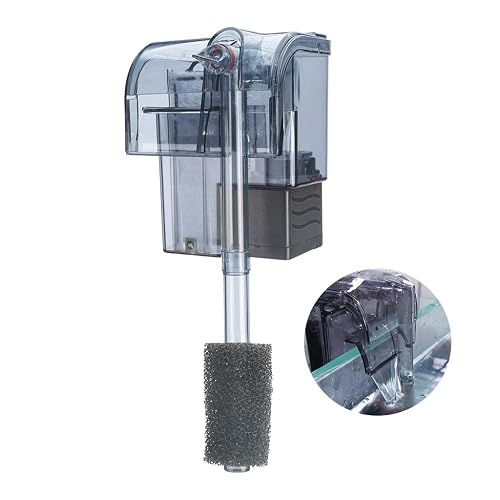
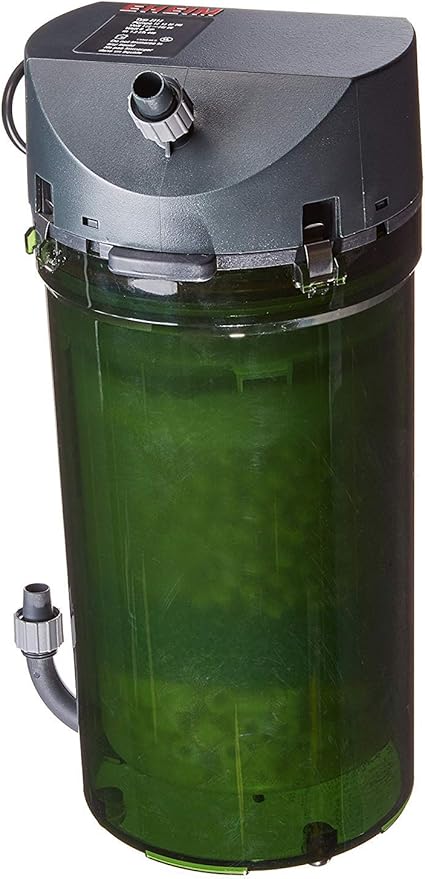
Which filter? For goldfish I'd take a canister or a strong HOB rated above your tank size — the biological media is what does the real work. Goldfish also churn up substrate looking for food, so mechanical filtration that catches floating debris matters more than it does in a planted community tank. Whatever you buy, don't fall for the "replacement cartridge every month" upsell; rinse the media in old tank water and replace only when it falls apart. The bacteria living in that media are your filtration.
Myth 6: Feed Them as Much as They'll Eat
Goldfish will eat until they're sick, and that's not a figure of speech. Goldfish don't have true stomachs — food passes through a long intestine — so they can't process big meals. Overfeeding is the number one cause of swim bladder problems, constipation, and the ammonia spikes that poison the whole tank.
The rule that works: offer a pinch they can finish in two minutes, twice a day. If food hits the bottom and sits there, you've overfed. When I travel, I use an automatic fish feeder set to the smallest portion — I come home to a cleaner tank than the people who "just gave them a little extra."
And yes, a blanched, deshelled pea is a legitimate remedy for a constipated goldfish — that one's real. But it's a treatment, not a diet.
Myth 7: Bread Is a Fine Treat for Goldfish
Please don't feed goldfish bread. It has zero nutritional value for them, it expands in water, and it can block their intestines. Same goes for crackers, cereal, and anything yeasted. Goldfish food — pellets, gel food, and occasional blanched vegetables — is boring for a reason. It's what their digestive systems actually handle.
The National Research Council's work on fish nutrition is clear that fish need species-appropriate diets. A goldfish fed bread is like a dog fed cake: it fills the stomach without feeding the body.
Myth 8: Tap Water Straight From the Faucet Is Fine
Municipal water contains chlorine and often chloramine, and both destroy fish gills. "I let it sit out overnight" doesn't remove chloramine, which is what most cities use now. The fix is trivial: a water conditioner dechlorinates instantly. I use Seachem Prime, but any quality conditioner that handles chloramine works. Treat every drop that goes in the tank, every time, including during water changes.
Myth 9: Goldfish Need Cold Water, So No Heater
Goldfish are coldwater fish, but that doesn't mean they want to freeze. Fancy goldfish do best between 68-75°F (20-24°C), and what kills them isn't the cold — it's the swings. A tank in a drafty room can drop ten degrees overnight, and rapid temperature change is a top stressor that opens the door to ich and fin rot.
My take: a small adjustable heater set around 70°F keeps the temperature stable, and stability matters more than the number on the dial. Commons in an unheated outdoor pond are fine — that's their natural range. A fancy goldfish in a living room is not a pond fish.
Myth 10: Water Changes Stress the Fish — Leave the Tank Alone
This myth has killed more goldfish than any disease. Yes, a sloppy water change with mismatched temperature or untreated water will stress a fish. But dirty water stresses it far more. Goldfish produce ammonia constantly, and ammonia burns gills, suppresses immunity, and sets up every disease you can name. The classic ammonia warning signs — gasping at the surface, red streaking on fins and body, sitting on the bottom with clamped fins — are all things I've watched owners misread as "laziness." It's not laziness. It's poisoning.
The schedule that works for goldfish: 25-50% weekly, water treated with conditioner and matched to tank temperature. Our water change schedule guide has the full breakdown. And don't trust your eyes — test. The API Freshwater Master Test Kit is the standard for a reason: liquid tests for ammonia, nitrite, nitrate, and pH. Ammonia above zero is a problem, full stop.
Myth 11: Goldfish Can Live With Tropical Fish
Goldfish are coldwater fish with a high waste output and a mouth that will absolutely eat a neon tetra. Tropical fish need 75-80°F water — too warm for goldfish long-term. The fish that works with a goldfish is another goldfish. That's it. Every "goldfish community tank" I've seen ends with the goldfish bullying everyone, the tropical fish cooking the goldfish, or both at once.
Myth 12: A New Tank Is Ready as Soon as the Water Clears
Clear water isn't cycled water. A new tank needs time for beneficial bacteria to establish — the nitrogen cycle — before it can handle fish waste. Adding goldfish to an uncycled tank means ammonia spikes in the first weeks, and that's the number one killer of new goldfish. The fix is patience: cycle the tank first, or if you're already stuck with a fish, do frequent water changes while the cycle establishes.
If you're setting up a first goldfish tank, our nitrogen cycle guide walks through it without the jargon. Skip this step and you're not keeping fish, you're running an ammonia experiment.
The Quick Cheat Sheet
If you remember nothing else, remember this:
- Bowl = bad. 20 gallons minimum for one fancy goldfish; 40+ for commons.
- Goldfish remember. They feel stress. Treat them like animals, not ornaments.
- Filters are non-negotiable. Filter at double the tank volume.
- Feed a pinch they finish in two minutes, twice a day. Less is safer than more.
- Every drop of water gets conditioner. Every time.
- Stable temperature beats any number on the dial. A heater prevents swings.
- Test the water weekly with a liquid kit. Ammonia above zero means action.
- Cycle the tank before the fish. Clear water is not cycled water.
The Bottom Line
Here's the honest version: goldfish are not the easy starter pet the fair gave you. They're high-waste, long-lived, intelligent fish that need real tanks, real filtration, and a keeper who tests water. Do it right and you get a fish that greets you at feeding time for 15 years. Do it wrong and you replace it every year and call it learning.
Start with the tank, not the fish. Cycle it, filter it, heat it, test it. Then add a single goldfish — one, in a proper 20-gallon-plus home — and watch what it actually does when it's healthy. It's not a decoration with a three-second memory. It's a fish that remembers you.
And if you already have a goldfish living in a bowl right now, don't panic and don't guilt-trip yourself — upgrade it. A plastic tub or a 20-gallon tank with a filter costs less than a trip to the vet, and your fish will show you the difference within a week. Brighter color, more activity, actual interest in you. That's the fish you were supposed to have all along.