Betta Fish Care: Tank Setup, Feeding, and Maintenance That Actually Keeps Them Alive
Disclosure: PawCritic is reader-supported. Links below are Amazon affiliate links, and we may earn a small commission if you purchase through them at no extra cost to you.
The betta fish in the pet store cup is having a rough day, and it's not the fish's fault. It's been bred for centuries in Thailand and Cambodia from ancestors that lived in warm, shallow, slow-moving water — rice paddies, floodplains, roadside ditches. Not vases. Not bowls. Not the 1.5-gallon "betta starter kit" with a peace lily growing out of the top.
Here's the number that should make you rethink everything: a betta kept in a bowl lives, on average, 1 to 2 years. The same fish in a heated, filtered 5-gallon tank routinely hits 4 to 6. Same genetics. Same fish. The only variable is the environment. If you want the "best" betta setup without the guesswork, our betta tank guide covers the gear — but this article is the how-to that goes with it.
First, Unlearn the Bowl
I get why bowls exist. They're cheap, they look elegant on a desk, and the marketing has spent decades telling you bettas "prefer small spaces." They don't. That's a myth built on the fact that bettas are labyrinth fish — they can breathe atmospheric air through a special organ, which lets them survive in oxygen-poor water that would kill other fish. Survival is not the same as thriving. A betta in a bowl isn't happy; it's just not dead yet.
Bettas are territorial and aggressive with their own kind, sure. But that instinct has nothing to do with tank size. In the wild, a single male defends a territory measured in square feet of warm water. A 1-gallon bowl is the fishkeeping equivalent of living your whole life in a closet.
Minimum Tank Size: 5 Gallons, No Exceptions
I'm going to be blunt: 2.5 gallons is the absolute floor for a betta, and even that requires heroic maintenance. Five gallons is the number I recommend to everyone, and 10 gallons is genuinely better. Bigger water volume means water parameters stay stable longer — temperature swings are slower, ammonia spikes are diluted, and your weekly maintenance becomes a routine instead of a crisis.
Why does stability matter so much? Bettas are sensitive to water quality in ways that don't show up immediately. Chronic exposure to ammonia and nitrite suppresses their immune system, and a suppressed immune system is how fin rot, ich, and velvet take hold. The University of Florida's IFAS Extension program, which publishes betta husbandry fact sheets for tropical fish owners, is explicit that proper filtration and regular water changes are non-negotiable for long-term betta health.
A 5-gallon tank with a lid (bettas jump — this is not optional), a gentle filter, and a heater is the baseline. Anything smaller, and you're managing a health crisis waiting to happen.
Heating: The Most Overlooked Piece of the Puzzle
Bettas are tropical fish. Their ancestors evolved in water that sits between 78°F and 82°F year-round. Room temperature — the 68-72°F of a typical house — is not "close enough." It's chronic cold stress.
Cold water does three bad things to a betta: it slows their metabolism (which suppresses digestion and immune function), it makes them lethargic, and it shortens their lifespan. The temperature range you want is 78-80°F, and you need an adjustable heater rated for your tank size, plus a thermometer to verify it. Trust me on this: heater thermostats drift, and a thermometer is the only way to know.
There's a reason every serious fishkeeping community says "heated, filtered tank" like it's one word. It is one word. A betta in unheated water is a betta being slowly worn down.
Filtration: Keep It Gentle
Bettas are weak swimmers with big, flowing fins. A filter with a strong current will exhaust them — you'll see them hiding in corners, getting pushed around, or refusing to come out. The answer isn't no filter; it's a gentle filter.
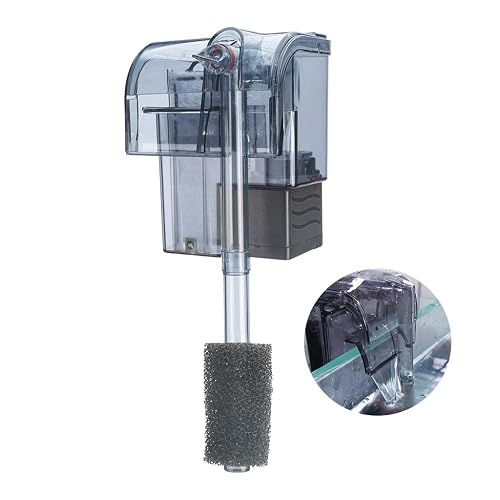
Sponge filters are the classic choice for betta tanks. They provide biological filtration (beneficial bacteria that consume ammonia and nitrite), they create barely any current, and they're nearly impossible to hurt a betta with. Hang-on-back filters work too, but you want one with an adjustable flow rate, baffled output, or both. Aim for water movement you can barely see — a gentle ripple at the surface is plenty.
The Nitrogen Cycle: Do This Before You Add the Fish
This is the step almost everyone skips, and it's the reason so many new bettas die in the first month. When fish produce waste, it breaks down into ammonia, which is toxic. Beneficial bacteria then convert ammonia to nitrite (also toxic), then to nitrate (much less toxic, removed by water changes). The colony of bacteria that does this is called the "cycle," and it takes 4-8 weeks to establish in a new tank.
If you put a betta in an uncycled tank, ammonia and nitrite build up and poison the fish. The classic signs: clamped fins, gasping at the surface, lethargy, and red, inflamed gills. If you're new to this, read how to cycle an aquarium before you buy anything living. It's the single most important concept in fishkeeping, and it's not complicated once someone explains it in plain language.
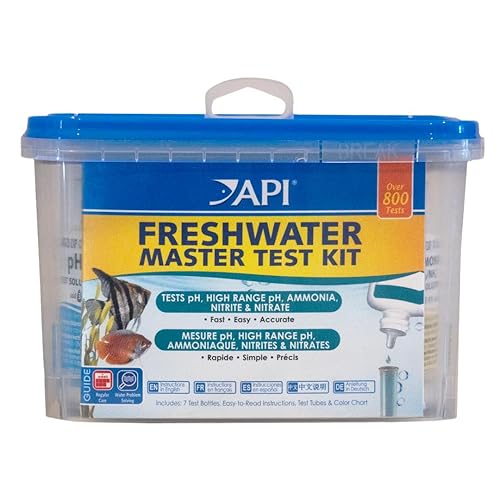
The gold standard for monitoring all of this is a liquid test kit — the API Freshwater Master Test Kit is the one most of us use. It runs hundreds of tests and measures ammonia, nitrite, nitrate, and pH. You'll use it a lot during cycling, then weekly once the tank settles in. Test strips are fine for a quick check between full tests, but they're less accurate — don't rely on them alone.
If you're already stuck with a fish-in cycle (you added the betta first — we've all done it), the protocol is: test daily, do partial water changes whenever ammonia or nitrite reads above 0.5 ppm, and dose a bottled nitrifying bacteria product to speed things along. It's more work, but it's survivable.
Plants and Decor: Think Safety First
Betta fins are delicate, and plastic plants with sharp edges are one of the most common causes of torn fins and stress-related illness. If you want live plants (best option — they help water quality and bettas love resting on broad leaves like anubias or java fern), great. If you want artificial, choose silk plants, not plastic. Run your fingers along the leaves — if it feels rough on your skin, it'll shred a betta's fins.
For hardscape, smooth ceramic or resin pieces are fine, but inspect them for sharp edges and make sure there are no small openings a curious betta could wedge itself into. Bettas also love places to rest near the surface — they breathe air, so a broad leaf, a betta hammock, or a floating log near the top is a genuinely appreciated addition. Just leave enough open swimming room in the middle; the goal is a tank that feels like territory, not an obstacle course.
Feeding: Less Than You Think, More Variety Than You Think
Overfeeding kills more bettas than any disease, and it's the mistake I see most often. A betta's stomach is roughly the size of its eye. Two to three pellets twice a day is the standard adult portion — and one day a week, skip a feeding entirely. Fasting gives their digestive system a break and prevents the constipation and bloating that bettas are prone to.
Quality matters as much as quantity. A high-protein betta pellet with a named fish or insect protein first in the ingredients is the base of a good diet. On top of that, rotate in frozen or live foods — bloodworms, brine shrimp, daphnia — a couple of times a week. These aren't treats; they're closer to what bettas actually eat in the wild, and they provide nutrition that dry pellets can't fully replicate.
Uneaten food is a water quality problem, not just a waste problem. If pellets are hitting the substrate and sitting there, you're feeding too much. Watch your betta eat, give them two minutes, and remove anything left over.
Water Changes: The Weekly Non-Negotiable
Even with a filter, the nitrogen cycle only converts ammonia to nitrate — it doesn't remove nitrate. Nitrate builds up over time and, at high levels, causes stress and long-term health problems. The only way to remove it is water changes. For a 5-gallon tank, a 25-30% weekly change is the sweet spot.
Use a gravel vacuum to pull waste out of the substrate — that's where uneaten food and detritus collect. Dechlorinate the new water before it goes in (tap water chlorine and chloramine will kill the beneficial bacteria and stress the fish), and match the temperature within a degree or two of the tank. A sudden temperature swing of more than a few degrees is itself a stress event. Our aquarium water change guide breaks down the full schedule for every tank type if you want the details.
Health Problems to Watch For
Know what a healthy betta looks like so you can spot trouble early: active, curious, with fins held out and colors bright. When a betta looks "off," it's usually one of these:
- Fin rot — ragged, receding, or discolored fin edges, often with a white or black margin. Usually caused by poor water quality. First response: improve water quality with more frequent changes. If it progresses, treatment is needed.
- Ich — tiny white spots like grains of salt across the body and fins, plus flashing (rubbing against decor). Highly treatable if caught early.
- Velvet — a dusty, gold or rust-colored film on the body, often with lethargy and clamped fins. More serious than ich; treat fast.
- Swim bladder issues — floating sideways, struggling to stay upright, or sinking to the bottom. Often diet-related (overfeeding, constipation); fasting and a fiber-rich food like daphnia usually help.
- Popeye — one or both eyes bulging. Usually water quality or infection; needs a closer look.
For a deeper breakdown of symptoms and treatments, our guide to common aquarium fish diseases covers the full lineup. The universal rule: the earlier you catch it, the easier it is to treat — and most early disease signs are really water quality signs.
Going on Vacation? Plan the Feeding First
A healthy adult betta can go a week without food — genuinely. They'd rather be slightly hungry than be poisoned by a weekend's worth of decaying pellets dumped in by an overzealous neighbor. If your trip is under five days, the correct move is to feed normally before you leave, do a water change, and leave the fish alone. No vacation blocks, no "just in case" extra portions.
For longer trips, an automatic feeder is the better tool — set it to dispense a small portion once a day. The Petbank automatic fish feeder is the one I trust for betta tanks because it lets you control the portion size precisely, which matters when a single extra pellet can foul a 5-gallon tank. Test it for a few days while you're home before you rely on it — feeders jam, and a jammed feeder is worse than no feeder.
And never, ever ask a well-meaning house-sitter to "feed the fish twice a day" for a fish that eats twice a day at best. That's how you come home to a green tank and a dead betta.
The Weekly Betta Routine, Condensed
Here's the full maintenance loop, simplified:
- Daily (2 minutes): Feed 2-3 pellets twice a day. Watch them eat. Check the temperature reading. Glance at the fish — fins out, colors bright, swimming normally?
- Weekly (15 minutes): 25-30% water change with a gravel vacuum. Dechlorinate and temperature-match the new water. Test ammonia, nitrite, nitrate, and pH with the liquid kit. Clean the glass if needed.
- Monthly (10 minutes): Rinse filter media in old tank water (never tap water — it kills the bacteria). Trim live plants. Check heater and equipment.
- Quarterly: Full equipment check — replace the heater if it's aging, check the lid for gaps, inspect the filter tubing.
That's the whole secret. It's not a lot of work — it's less than the time most people spend on a houseplant — but it has to be consistent. Bettas are hardy in the sense that they tolerate poor conditions for a while. The catch is that "a while" comes out of their lifespan.
My Take
Bettas get sold as the "beginner fish you can keep in anything," and that marketing has quietly killed more fish than any disease. They're actually a fantastic first fish — colorful, personable, full of personality, and they'll beg at the front of the glass like a tiny underwater puppy. But they deserve the same basics as any other fish: space, heat, filtration, and clean water.
Give a betta a heated, filtered 5-gallon tank and a consistent routine, and you'll have a fish that lives years, recognizes you, and flares at its own reflection with undignified enthusiasm. That's the betta people rave about. The one in the bowl never gets to be that fish.
Related reading: Best Betta Tanks & Bowls, How to Cycle an Aquarium, Aquarium Water Change Schedule, Common Aquarium Fish Diseases, Best Aquarium Test Kits, and Aquarium Myths Debunked.