How to Choose a Parrot Cage: Sizing, Bar Spacing & Setup That Keeps Birds Safe
Disclosure: PawCritic is reader-supported. A couple of links below are Amazon affiliate links, and we may earn a small commission if you purchase through them at no extra cost to you.
I once watched a woman in a pet store hold a cage up next to her new cockatiel and say, "See? It's bigger than him!" The cage was about the size of a microwave. The bird could stretch its wings and touch all four walls at once. She bought it, and I still think about that bird.
Here's the thing about parrot cages: size isn't about whether the bird fits. It's about whether the bird can live. A parrot's cage is where it spends the majority of its life — most parrots are in their cages 12+ hours a day, every day, for 20, 40, even 60 years. The cage isn't a box you keep a bird in. It's the bird's entire world, and it deserves better than "bigger than him."
So let's do this properly: how to size a cage, why bar spacing can literally kill a bird, what materials are safe, and what to set up inside. No fluff, just the stuff I wish someone had told me before my first bird.
Step 1: Size It for Wing Span, Not Body Length
The most common sizing mistake is measuring the bird and buying a cage that's "big enough for it." A cage needs to be big enough for the bird to fully extend its wings and flap without touching the bars. That's the absolute minimum. Most parrots also need room for at least two perches at different heights, food and water bowls, and toys — and still have space to move.
General minimums by bird size (length × width × height):
- Budgies/parakeets: 18" × 18" × 24" minimum. Most sold "starter cages" are smaller. A pair needs bigger.
- Cockatiels: 20" × 20" × 28" minimum. These guys love to climb, so height helps.
- Lovebirds/parrotlets: 20" × 20" × 24" minimum. Tiny bodies, big attitudes, and they need horizontal space to fly.
- Conures: 24" × 24" × 30" minimum for smaller conures, bigger for sun or nanday.
- African greys / Amazons: 24" × 24" × 36" minimum. Realistically, bigger.
- Macaws / large cockatoos: 36" × 36" × 60" or larger. These birds need serious space, full stop.
Notice what's missing: no "for every inch of bird, one inch of cage" math. That rule undersizes everything. A better rough check: the bird should be able to fully spread its wings inside the cage without touching either side. If it can't, the cage is too small — period.
And the honest addendum: these are minimums, not targets. Bigger is always better, and a flight cage (longer than it is tall) is ideal for most small-to-medium parrots because it gives horizontal flying room. Parrots fly side to side, not up and down. A tall narrow cage looks impressive and gives a bird almost nothing.
Step 2: Bar Spacing — the Safety Detail People Skip
Here's the part that can genuinely injure or kill a bird, and it's the detail I see ignored more than any other: bar spacing.
If the bars are too far apart for the bird's head size, the bird can get its head stuck between them. Panic follows, and a panicking bird will thrash — breaking its own neck, a wing, or its beak. If the bars are too close together, the bird can trap a toe or a foot between them, leading to injuries, and some birds chew on bars they can get their beaks around, which damages their beak over time.
The safe ranges:
- Budgies, parrotlets, finches: 1/4" to 1/2" bar spacing
- Cockatiels, lovebirds: 1/2" to 5/8"
- Conures: 5/8" to 3/4"
- African greys, Amazons: 3/4" to 1"
- Large macaws, cockatoos: 1" to 1.5"
The rule of thumb: the bird's head should never fit between the bars. When in doubt, go narrower. A budgie in a cage with 1" bar spacing is an accident waiting to happen — and I've seen exactly that in more than one "bargain" cage.
Step 3: Material Matters More Than You Think
Cage material is a health decision, not just a looks decision. Here's the breakdown:
Powder-coated steel — the standard for most quality cages. Durable, safe when intact, easy to clean. The coating can chip over time, and a chewed spot exposes bare metal — so inspect regularly, especially with heavy chewers like cockatoos.
Stainless steel — the gold standard. Non-toxic, unchewable, lasts essentially forever, and easiest to sanitize. Expensive up front, but for a bird that lives 40 years, it amortizes to pennies a day. If you're buying a cage for a large parrot, stainless is the recommendation I make without hesitation.
Galvanized wire — avoid unless it's specifically passivated for birds. Galvanization involves zinc, and zinc is toxic to birds. It's not a maybe-toxic; zinc poisoning is a documented killer. Some older cages are galvanized; if you inherit one, don't use it until you know the coating is bird-safe.
Bare brass, copper, or leaded materials — never. Copper and brass are toxic to birds. Lead is lethal. Vintage cages can contain lead paint — another reason "vintage" is a bad idea for a living creature that chews everything.
Also check the welds. A cage with sharp burrs or poorly finished welds is a cage that will eventually cut a bird's foot. Run your hand along the bars before you buy; a quality cage is smooth everywhere.
Step 4: The Features That Actually Matter
Once size, spacing, and material are right, the cage should still pass these checks:
- Horizontal bars. Parrots climb with their beaks and feet, and horizontal bars are essential for climbing. Vertical-only bars leave a bird unable to move around its cage naturally. This one is non-negotiable for me.
- Door size. The main door should be big enough to reach in and get the bird out comfortably — and ideally, the cage should open from the top or have a large front door for easy cleaning. Small doors make every interaction awkward and every clean-out a chore.
- Removable bottom tray. You'll be cleaning this daily. A tray that slides out cleanly — ideally one you can pop in the dishwasher — makes the difference between a 5-minute clean and a 20-minute ordeal.
- Grate above the tray. Keeps the bird away from old food and droppings. Non-negotiable for hygiene.
- Feed cups that are accessible from outside. Reaching into the cage twice a day to change bowls stresses birds and gets you bitten. Outside-accessible cups are standard on quality cages.
- Locking mechanisms. Parrots are escape artists. A latch a cockatoo can open isn't a latch. Padlock hasps or secure locks are worth it for the smart ones — and they're all smart.
And the feature that doesn't matter: how "pretty" the cage is. Your bird doesn't care. Prioritize safety and function; a plain stainless cage beats a decorative powder-coated one every time if the plain one is bigger and safer.
Step 5: What to Put Inside
A cage is a frame. The inside is where the bird actually lives, and a bare cage — even a big one — is a sad cage. Here's the setup that keeps birds active and healthy:
- Perches of varying thickness and material. All-same-size dowel perches cause foot problems — arthritis and pressure sores — because the bird's feet grip the same diameter all day. Mix natural wood branches (different widths), rope perches, and a flat platform perch for resting. A set of natural wood perches gives you several diameters and textures at once, which is exactly what bird feet need. Rope perches are comfy but check them for fraying; loose threads can wrap around toes.
- Food and water bowls, placed away from perches. Birds poop where they sit; keep the bowls out of the fall zone. Multiple water stations are a bonus — birds spill.
- Toys, rotated regularly. Foraging toys, shreddable toys, and things that make noise. A parrot with nothing to do is a parrot that plucks its feathers or screams. Rotate toys weekly so nothing gets boring. Our guide on bird toys for mental stimulation has specific recommendations by species.
- Nothing in the cage that can trap a head. This means checking every toy for gaps and rings. The classic accident: a bell with a clapper gap that a bird's beak gets caught in, or a chain link that traps a toe.
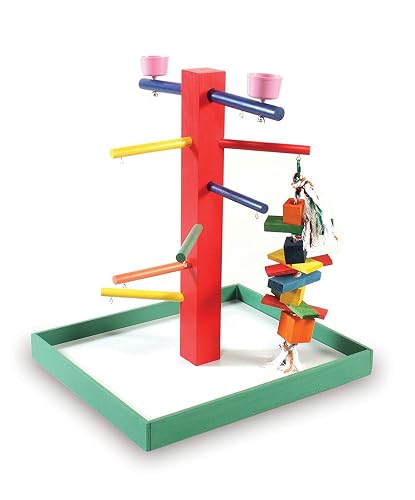
If you're buying a cage with a play top — the kind with a perch and toy hooks on the roof — it doubles as an out-of-cage hangout, which most birds love. A good play-top cage like the Prevue Pet Products play-top cage is a solid choice for small-to-medium parrots: right bar spacing, horizontal bars, and a usable play area on top. It's the cage I recommend most often to people with budgies, cockatiels, and conures who want one cage to do the whole job.
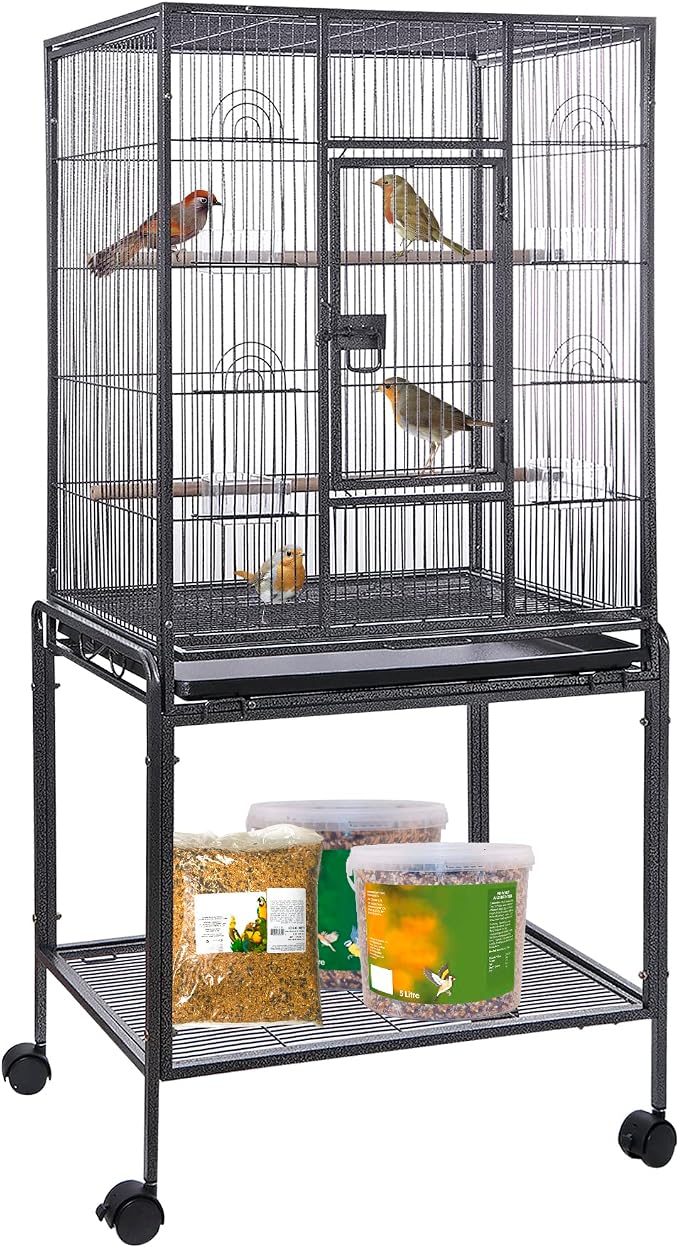
Step 6: Where to Put the Cage (Yes, This Is Part of Choosing It)
A cage that's perfect on paper can fail in the wrong location. Think about placement before you buy, because size and weight determine where it can go.
Parrots are social flock animals. The cage belongs somewhere the bird can see the family — usually a living room or main living area — but not in the middle of chaos. The rules:
- Against a wall, not in front of a window. A bird in a window gets a constant parade of predators (real or imagined) and temperature swings. One wall against something solid gives a sense of security.
- Out of direct sun and drafts. No unshaded windows, no AC vents blowing on the cage, no exterior doors that blast cold air every time they open.
- Away from the kitchen. This one saves lives. Cooking fumes — especially from non-stick pans heated too high — release PTFE fumes that are rapidly lethal to birds. According to the ASPCA Animal Poison Control Center, overheated non-stick cookware is a documented cause of sudden bird death. The kitchen is the most dangerous room in the house for a parrot, and the cage should not be in it.
- High enough to feel safe. Birds feel vulnerable at floor level. Waist height or higher, on a stand or table. A cage on the floor is a stressed bird.
And the cage needs to be somewhere you'll actually interact with the bird. The bird's cage in a rarely-used spare bedroom is a bird slowly losing its mind from isolation. Visibility from the family's living space is part of the bird's mental health.
Budget Realities: Where to Spend, Where to Save
Cages range from $40 to $1,500+, and the price difference isn't just branding. Here's how I'd allocate a budget:
Spend on: size, material safety, and solid construction. These are the cage's job. A cheap cage that's too small or poorly built is a constant problem — rust, chipping coating, sharp edges — and you'll replace it, spending twice.
Save on: accessories. You don't need the matching $60 toy bundle from the pet store. A few natural branches from a bird-safe tree (washed, pesticide-free, species-appropriate), simple foraging toys, and paper towel liners do the job for a fraction of the price. The bird cares about variety and activity, not the brand on the toy.
The math that convinces people: a quality stainless cage for a grey or macaw costs $600-1,200 and lasts 30-40 years. A cheap cage costs $200 and lasts 5 years, and the bird spends those years in a cage that rusts and chips. The expensive cage is the cheap one, over time.
Common Cage Mistakes I See Constantly
Quick hits, from the cages I've seen in real homes:
- The "starter cage" trap. Pet stores sell tiny cages with a bird graphic on the box. They're sized for shipping, not for living. Measure the interior, not the box.
- Round cages. Birds need corners to feel secure — a round cage leaves them feeling exposed from every angle, and the curved bars make climbing awkward. Square or rectangular, always.
- One toy in a big cage. A big cage with nothing in it is worse than a small cage with enrichment. Fill the space.
- Dowels only. The all-dowel cage is a foot-problem factory. Mix perch diameters and materials.
- Buying the cage for the bird you have, not the bird it will be. A baby cockatiel becomes an adult cockatiel with the same needs. Buy the adult size now.
- Ignoring bar spacing because the cage is "a good deal." There is no good deal on a cage that can trap your bird's head. This is the one spec that's non-negotiable.
For the full list of what can hurt birds inside the home, our guide to household dangers for pet birds goes deep into kitchen fumes, toxic plants, and the other hidden killers. Every bird owner should read it once.
The Takeaway
Choosing a parrot cage comes down to five numbers and one idea. The numbers: wing-span clearance for size, correct bar spacing for head safety, safe material (stainless or bird-safe powder coat), horizontal bars for climbing, and a location away from the kitchen. The idea: the cage is your bird's home for decades, so buy the biggest safe one you can afford and fill it with a life, not just a bird.
And when in doubt, remember the woman in the pet store. Her cockatiel deserved better than "bigger than him," and so does yours. A bird that can flap, climb, forage, and retreat in its cage isn't just housed — it's living. That's the whole point of the exercise.
Related reading: Best Bird Cages & Aviaries, Household Dangers for Pet Birds, Best Bird Toys for Enrichment, Choosing Your First Pet Bird, and Parakeet vs Cockatiel.